Stereo System Buying Guide: How to Choose the Right Speakers, Amplifier, and Audio Setup for Better Sound in Any Room

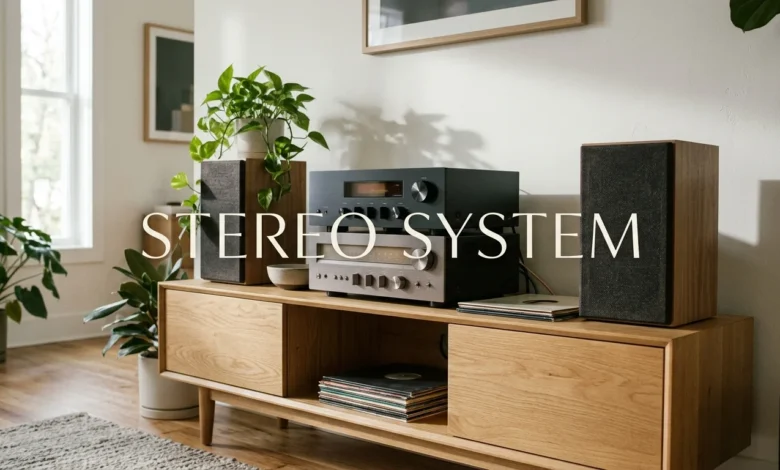
A good stereo system can make music sound wider, clearer, and more natural than compact single-speaker solutions. The right setup depends on your room, listening habits, sources, and available budget. You do not need expensive equipment to build a satisfying home audio setup.
Quick answer: Start with two suitable speakers and matching amplification. Then choose the sources and connections you use most often. Bookshelf speakers suit many smaller rooms, while floorstanding models provide greater scale. Prioritize speaker quality, room fit, and reliable connectivity before spending money on extra features.
Stereo System at a Glance
| Area | What to Consider | Good Starting Point |
|---|---|---|
| Speakers | Room size, placement, bass needs | Bookshelf pair for smaller rooms |
| Amplification | Power, inputs, speaker compatibility | Integrated amplifier or receiver |
| Music sources | Streaming, vinyl, CDs, TV | Choose only sources you use |
| Connectivity | Bluetooth, Wi-Fi, optical, HDMI | Match your current devices |
| Subwoofer | Bass extension and room size | Optional for most music setups |
| Budget | Speakers, amplifier, sources, cables | Spend heavily on speakers first |
| Placement | Distance from walls and listening seat | Keep left and right positions balanced |
What Makes a Good Home Audio Setup?
Two-channel audio uses separate left and right speakers to create a defined soundstage. Good placement helps vocals appear centered while instruments spread across the room. This effect is one reason dedicated two-speaker setups remain popular with music listeners.
The system also needs a device that powers passive speakers. An integrated amplifier combines volume control, input switching, and amplification in one enclosure. A receiver adds features like radio, networking, and broader connection options.
Active speakers offer another route because amplification sits inside the speaker cabinets. They reduce equipment count and simplify installation for smaller spaces. Passive speakers give you more flexibility to upgrade individual components later.
Which Stereo System Type Should You Choose?
Different configurations suit different homes and listening priorities. No single format works best for everyone. Your room and preferred sources should guide the decision.
| Setup Type | Main Strength | Main Limitation | Best For |
|---|---|---|---|
| Active speakers | Simple installation | Fewer separate upgrade options | Apartments and desktops |
| Integrated amplifier + passive speakers | Flexible and music-focused | Requires more components | Dedicated music listening |
| Stereo receiver + speakers | Many convenient features | Can include unused functions | General home listening |
| Floorstanding setup | Greater scale and bass potential | Needs more floor space | Medium and large rooms |
| Compact shelf system | Small footprint | Limited upgrade flexibility | Bedrooms and casual listening |
For most first-time buyers, passive bookshelf speakers with an integrated amplifier offer strong flexibility. Active speakers make more sense when simplicity matters most. Large towers become attractive when the room can support their greater output.
Active Speakers: Pros and Cons
Active speakers need fewer separate boxes and often include digital connections. Many current models also support wireless streaming from phones and computers. Setup can be easier because the amplifier and speakers are designed to work together.
Their main drawback is reduced component flexibility. A problem with an amplifier can affect the entire product rather than just one replaceable component. Buyers who enjoy gradual upgrades may prefer a passive design instead.
Passive Speakers: Pros and Cons
Passive designs let you change the amplifier without replacing the speakers. They also give buyers more choices across different sizes and price levels. This flexibility can make them useful for systems designed to grow.
They require an external amplifier and speaker cable. Matching equipment adds another decision for new buyers. The extra equipment also needs suitable shelf or cabinet space.
Bookshelf or Floorstanding Speakers?
Bookshelf models usually work well in bedrooms, offices, apartments, and modest living rooms. Their smaller cabinets make positioning easier near furniture. A separate subwoofer can add deeper bass later if needed.
Floorstanding speakers use larger cabinets and often include additional drivers. Their greater cabinet volume can support stronger bass and wider output. They usually need more breathing room from nearby walls.
Room size matters more than appearance alone. Oversized speakers can create heavy bass in a small space. Smaller speakers can also struggle when asked to fill a large room loudly.
Amplifier, Receiver, or Powered Speakers?
An amplifier’s main job is to provide enough clean power for the speakers. A receiver combines amplification with additional functions and source controls. Current receivers may include streaming, digital inputs, Bluetooth, or television connections.
Choose an integrated amplifier when focused music playback is your main goal. Choose a receiver when you need more built-in convenience and device switching. Powered speakers are attractive when you want fewer components on display.
Do not choose by wattage alone. Speaker sensitivity, listening distance, room size, and desired volume also affect power requirements. Compatibility and clean operation matter more than chasing the largest number.
What Sources and Connections Do You Need?
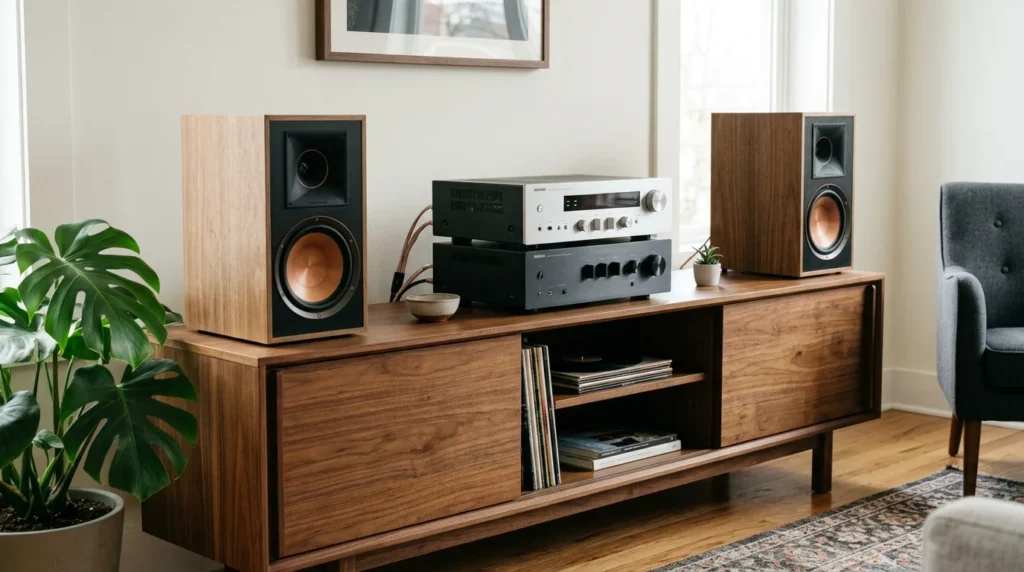
Start by listing how you listen to music each week. Common sources include streaming services, turntables, CD players, computers, and televisions. Buying unused inputs adds cost without improving sound.
Bluetooth offers simple phone playback, but Wi-Fi streaming can provide broader multi-device features. Optical connections work well with many televisions and digital sources. HDMI ARC or eARC can simplify television control on compatible equipment.
Vinyl requires special attention because a turntable produces a phono-level signal. You need a phono preamp somewhere in the playback chain. It may be built into the turntable, amplifier, receiver, or a separate component.
How Much Should You Spend?
No fixed price guarantees satisfying sound. Current specialist guidance places many starter component systems around $1,000 to $2,000. More elaborate systems can rise quickly as sources and separate components are added.
Budget buyers can start lower by choosing active speakers or carefully selected entry-level components. Spending should reflect room size and actual listening needs. Avoid paying for connections, channels, or services you will never use.
Speakers deserve a substantial share of the budget because they strongly affect the final presentation. Set aside money for stands when bookshelf speakers need them. Basic, correctly sized cables are usually enough for a first setup.
Seven Smart Buying Checks Before You Purchase
- Measure your room. Note available speaker positions and listening distance before choosing cabinet size.
- Choose your main source. Prioritize streaming, vinyl, television, CDs, or computer audio based on how you’ll actually use it.
- Decide between active and passive speakers. Active models simplify setup, while passive models offer more flexibility for upgrades.
- Check every required input. Confirm support for phono, optical, HDMI, USB, Bluetooth, or Wi-Fi before buying.
- Match amplification properly. Use the speaker manufacturer’s recommendations when comparing suitable amplifiers.
- Plan speaker placement. Leave enough room for stable stands, cabinets, ventilation, and symmetrical positioning.
- Keep an upgrade path. Avoid spending the complete budget on features you may replace soon.
Stereo Versus Soundbar: Which Makes More Sense?
A two-speaker setup usually prioritizes music imaging and channel separation. A soundbar prioritizes television convenience and a cleaner installation. Your entertainment mix should decide which direction makes sense.
Movie-focused households may prefer a soundbar with a subwoofer and rear speakers. Techrolab’s Samsung HW-Q990C soundbar guide covers a multichannel alternative built around television use. Music-focused listeners may prefer dedicated left and right speakers instead.
Personal audio can also solve situations where room placement becomes difficult. Techrolab covers portable alternatives in its gaming earbuds guide and AirPods Pro comparison. Those options cannot reproduce the same room-filling presentation as separate home speakers.
How Speaker Placement Changes the Sound
Placement can improve a modest setup without buying new equipment. Start with both speakers similar distances from the listening position. Avoid placing one speaker in a corner while leaving the other exposed.
Moving speakers closer to walls can increase perceived bass. Pulling them forward can improve clarity in many rooms. Small changes of a few inches can make an audible difference.
Keep tweeters near ear height when practical. Speaker stands can help bookshelf models reach a useful listening height. Stable placement also reduces unwanted vibration and accidental movement.
Our Verdict
The best stereo system is the one that fits your room and everyday listening habits. Most new buyers should prioritize speakers, suitable amplification, and their essential music sources. Extra features should come after those three decisions.
For smaller rooms, quality bookshelf speakers provide a sensible starting point. Larger spaces may benefit from floorstanding models or an added subwoofer. Buyers wanting minimal equipment should consider well-equipped active speakers.
Avoid building around specifications that don’t match your daily use. A simpler setup with well-matched components can outperform a complicated collection of mismatched equipment. Plan the complete signal path before ordering individual products.
Frequently Asked Questions
What components do I need for a stereo system?
A basic stereo system needs two speakers, a music source, and suitable amplification. Powered speakers already contain amplification, so they need fewer external components. Passive speakers require an amplifier or receiver plus speaker cable.
Is a receiver better than an amplifier?
Neither option is automatically better for every listener. Receivers add features like switching, radio, streaming, and TV connections. Integrated amplifiers usually focus more closely on two-channel music playback.
Are bookshelf speakers enough for a living room?
Bookshelf speakers can work well in many small and medium living rooms. Their performance depends on listening distance, placement, cabinet design, and desired volume. A subwoofer can add deeper bass when your speakers need more low-frequency support.
Do I need a subwoofer for music?
A subwoofer is optional for most two-channel music setups. It becomes useful when speakers cannot reproduce the bass depth you want. Proper integration matters because excessive bass can overwhelm vocals and instruments.
Can I connect a turntable directly to an amplifier?
You can connect directly when the amplifier has a phono input. A turntable with its own phono preamp can use a standard line input. Otherwise, you need a separate phono preamp between both devices.
Build Around the Way You Listen
Start with the room, speakers, and music sources you already use. Those decisions make later amplifier and connection choices much easier. A carefully matched setup usually brings more value than buying components based on specifications alone.
Set a realistic budget and leave room for stands or required cables. Compare complete system cost rather than one attractive component price. Then spend time on placement before deciding whether you need any upgrades.