Contextual AI: Complete Overview of Meaning, Examples, CEO, Company Address, Logo, ReRanker, RAG Tools, ReRanker v2, and Wiki-Style Details


Contextual AI
Contextual AI, officially known as Contextual AI, Inc., is a Mountain View, California–based enterprise software company founded in 2023 by former AI researchers from Meta AI and Hugging Face. Specializing in advanced generative AI platforms, Contextual AI enables enterprises to deploy AI agents that are accurate, traceable, and grounded in their own data using sophisticated retrieval architectures.
This article provides a comprehensive overview of Contextual AI, covering its meaning and mission, practical use cases, key leadership including the CEO and founders, company address, branding and logo, core technologies such as the ReRanker, Retrieval-Augmented Generation (RAG) tools, the upgraded Reranker v2, as well as a wiki-style breakdown of the company’s history, funding, products, challenges, and strategic outlook for enterprise AI applications. For a closer look at this, see Divide symbol.
Key Facts and Overview of Contextual AI, Inc
| Category | Details |
| Company Name | Contextual AI, Inc. |
| Founded | 2023 |
| Founders | Douwe Kiela (CEO), Amanpreet Singh (CTO) |
| Headquarters | 2570 W. El Camino Real #120, Mountain View, California 94040, USA |
| Mission | Build a “context layer” for enterprise AI, enabling specialized, secure, accurate AI agents |
| Employees | 51–200 |
| Industries Served | Banking, media, technology, manufacturing, professional services |
| Core Technologies | RAG (Retrieval-Augmented Generation), Reranker, Reranker v2, instruction-following pipelines |
| Product Highlights | Modular retrieval-generation pipelines, pre-built connectors, enterprise-friendly UI, compliance with SOC2/HIPAA/GDPR |
| Key Milestones | – June 2023: $20M seed funding- August 2024: $80M Series A, valuation ~$609M- March 2025: Released instruction-following Reranker- August 2025: Open-sourced Reranker v2 |
| Competitive Differentiation | Enterprise focus, security & compliance, modular stack, RAG research roots, open-source contributions |
| Challenges | Competitive landscape, enterprise adoption hurdles, regulatory compliance, scaling vs. cost-effectiveness, balancing open-source & commercial offerings |
| Website | contextual.ai |
| Tagline/Messaging | “Build specialized AI agents that work securely on your data.” |
| Funding Raised | Seed: $20M; Series A: $80M |
| Valuation | $609M |
| CEO | Douwe Kiela |
| CTO | Amanpreet Singh |
Meaning and Mission
At its core, Contextual AI addresses one of the significant challenges in deploying generative language models in real-world enterprise settings: contextual grounding. Large language models (LLMs) are powerful but often suffer from issues such as hallucination (making up facts), out-of-date knowledge, and the inability to properly integrate and reason over large domain-specific datasets. Contextual AI’s mission is to layer a robust “context layer” over enterprise data, enabling specialized AI agents that are accurate, traceable, and production-ready.
In practice, the company offers a modular platform that integrates retrieval (bringing in relevant documents/data), generation (the LLM producing responses), and various pipeline components (such as reranking, document parsing, and evaluation) to create AI agents tailored to domains like finance, manufacturing, legal, and more. Their goal is to reduce the complexity of building these systems from scratch and provide enterprises with a way to deploy AI that understands their data, workflows, and edge cases.
Examples of Use Cases
Here are some concrete examples of how enterprises are using Contextual AI’s platform:
- A major semiconductor company uses the platform to build a “test program development” agent: employees write natural-language requests like “generate test steps for equipment X,” and the system produces structured test programs based on internal documentation.
- A finance or banking firm using the platform to automate procurement compliance checks: the AI agent reviews contracts, policies, internal reports, and flags areas of risk or non-compliance.
- A collaboration with WEKA IO: Contextual AI teamed with WEKA to provide the data infrastructure for its next-generation models (RAG 2.0) on Google Cloud, to enable high-scale training and inference for enterprise clients.
- Industries targeted include banking, technology, media, and professional services, with clients such as Qualcomm and HSBC mentioned in the press.
These examples illustrate the shift from generic, consumer-oriented LLMs to domain-specific, enterprise-grade AI that must integrate with internal systems, handle multi-modal data, and meet strict compliance or privacy requirements.
Company Address, Founders, and CEO

Founders: Douwe Kiela and Amanpreet Singh, both researchers with backgrounds at Meta AI (Facebook AI Research) and Hugging Face.
CEO: Douwe Kiela.
Company Address: 2570 W. El Camino Real #120, Mountain View, California 94040, USA.
Legal entity: Contextual AI, Inc.
The leadership context is key: Douwe Kiela had previously led a research team that helped pioneer the RAG (Retrieval-Augmented Generation) architecture, making the company’s foundation very much rooted in cutting-edge research rather than purely a commercial startup background.
Logo and Brand Identity
Contextual AI uses a minimalist, modern branding style suited to enterprise software and AI platforms. The company website features its name, “Contextual AI,” with straightforward typography and often a subtle icon or graphic representing “context layering” or interconnected nodes. Their brand messaging centers around “the unified context layer for enterprise AI” and “build your own specialized AI agents securely on your data.”
Competitive Differentiation
What sets Contextual AI apart?
- Founded by researchers who pioneered the RAG architecture
- Emphasis on enterprise viability, including security, compliance, and integration with business workflows
- Modular stack including reranking, retrieval, and specialized agents
- Early partnerships with major data infrastructure providers to ensure scalability
- Open-sourcing high-quality components like Reranker v2 to drive adoption and community trust
- High focus on ground truth, document attribution, and analysis of enterprise documents
Core Technologies: RAG, Reranker, Reranker v2
Retrieval-Augmented Generation (RAG)
RAG is a technique in modern LLM pipelines in which the model uses externally retrieved documents (from a database, vector store, or knowledge base) to ground its generation. This helps improve factual accuracy, provide citations, and tailor responses to domain-specific data rather than relying solely on what the model learned during pre-training.
Contextual AI positions itself as building a next-generation version of RAG (sometimes referred to as RAG 2.0) by tightly integrating retrieval, reranking, and generation, along with enterprise-grade features such as security, compliance, and data privacy.
Reranker and Instruction-Following Reranker
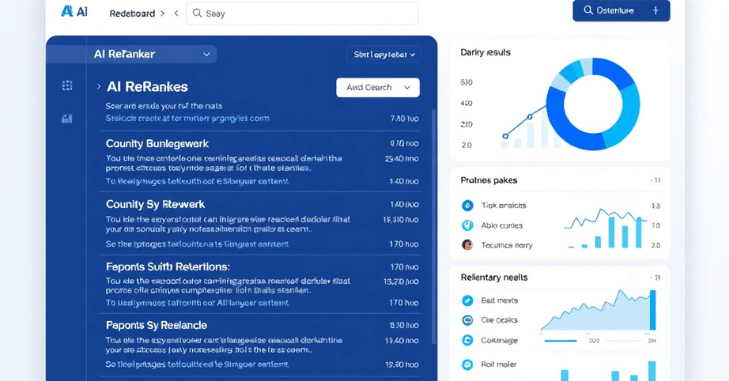
A reranker is a module in the retrieval/generation pipeline that ranks initial retrieval results based on relevance, quality, or custom instructions. Contextual AI introduced the “world’s first instruction-following reranker” in March 2025, which allows users to specify instructions such as “prioritize internal documents from the last 6 months” or “exclude draft documents” when ranking.
Reranker v2
In August 2025, Contextual AI open-sourced Reranker v2, a family of instruction-following rerankers available in 1B, 2B, and 6B parameter sizes, as well as quantized versions. The release includes evaluation datasets to help users replicate benchmark results.
By releasing Reranker v2, Contextual AI both supports the broader research community and demonstrates its commitment to developing modular pipeline components rather than monolithic models. The reranker sits between the retrieval and generation phases and provides a strong lever to improve the overall system’s performance
Company History & Funding (Wiki-Style)
- Founded: 2023
- Founders: Douwe Kiela (CEO) and Amanpreet Singh (CTO)
- Headquarters: Mountain View, California, USA
- Legal filing address: 2570 W. El Camino Real #120, Mountain View
- Mission: Build the “context layer” for enterprise AI, enabling organizations to create specialized, secure, and accurate AI agents on their data
Key Milestones
- June 2023: Emerged from stealth mode with a $20 million seed funding round led by Bain Capital Ventures, Lightspeed, Greycroft, and angel investors
- August 2024: Raised $80 million Series A, bringing valuation to approximately $609 million
- March 2025: Released the instruction-following reranker
- August 2025: Open-sourced reranker v2
Employees: About 51–200 employees
Industries served: Banking/finance, media, technology, manufacturing, professional services
Technology stack emphasis: RAG pipelines, context engineering for AI, enterprise security/compliance
Product and Platform Details
Contextual AI’s product offering is a platform described as a “unified context layer” for enterprise AI. Key capabilities include:
- Pre-built connectors & templates for faster deployment of custom AI agents
- Modular retrieval-generation pipelines integrating retrieval, reranking, generation, and evaluation
- Attribution & grounding with sentence-level citations, visual bounding boxes, document traceability
- Security & deployment flexibility, including SaaS, single-tenant, private VPC, and compliance with SOC2, HIPAA, and GDPR
- Enterprise-friendly UI and APIs allowing collaboration between business users and developers
- Performance benefits with cost and time savings, reduced time to production, and efficiency improvements
One of their flagship technologies is RAG 2.0: a refined retrieval-augmented generation pipeline that deeply integrates retrieval, reranking, and generation in a unified system. This offers higher accuracy, faster time-to-production, reduced hallucination, and richer domain customization.
Challenges and Considerations

Contextual AI faces several challenges and considerations as it grows and is adopted. The competitive landscape is crowded, with other AI companies and major tech providers offering RAG-style solutions, making differentiation critical. Enterprise adoption can be slowed by inertia related to data integration, governance, and security requirements, which often complicate deployment.
Additionally, the company must navigate regulatory compliance issues surrounding AI transparency, data privacy, and governance. Balancing scalability with cost-effectiveness for large-scale enterprise clients is another key challenge. Finally, Contextual AI must carefully balance between open contributions and commercial offerings to maintain differentiation and competitive advantage.
Company Info Snapshot
- Legal Name: Contextual AI, Inc.
- Founded: 2023
- Headquarters: 2570 W. El Camino Real #120, Mountain View, California 94040, USA
- Key People:
- Douwe Kiela – Founder & CEO
- Amanpreet Singh – Co-Founder & CTO
- Website: contextual.ai
- Funding Raised: Seed: $20M; Series A: $80M with valuation ~$609M
- Employees: ~51–200
- Primary Technology: RAG, RAG 2.0, instruction-following rerankers, enterprise AI agents
- Industries Served: Banking, media, technology, manufacturing, services
- Tagline/Messaging: “Build specialized AI agents that work securely on your data.”
Why RAG Matters & How Contextual AI Leverages It
Retrieval-Augmented Generation (RAG) has become a foundational architecture for enterprise-grade generative AI. Traditional LLMs generate responses based on pre-trained internal knowledge. RAG improves upon this by retrieving relevant external information at query time and feeding it to the model, thereby grounding responses in factual context.
Contextual AI’s approach involves several integrated steps to ensure accurate and enterprise-ready AI outputs. The platform begins with high-volume document ingestion and indexing, followed by semantic search combined with vector stores and metadata to retrieve relevant information. A reranker then refines these retrieval results according to specific business rules, while the generation model produces responses that include references and traceability.
Continuous monitoring and evaluation pipelines ensure accuracy and reliability, supported by deployment infrastructure designed for enterprise-scale performance and security. Additionally, instruction-following rerankers enable business users to provide custom ranking instructions, such as “prefer documents from the last three months” or “prioritize internal research,” allowing for precise, context-aware results.
What is Reranker v2 & Why It Matters
The release of Reranker v2 in August 2025 introduced:
- Available model sizes: 1B, 2B, 6B parameters (plus quantized versions)
- Multilingual support and instruction-following capability
- Low latency, high throughput, cost-effectiveness
- Supplied evaluation datasets for reproducibility
Advanced rerankers improve the quality of top-k retrievals, enhancing the overall system’s accuracy, compliance, and trustworthiness.
Logo, Visual Identity & Branding
Contextual AI employs a clean, professional visual identity appropriate for enterprise AI. Their branding emphasizes “context,” often featuring schematic diagrams of data retrieval and generation. The logo is typically straightforward typography with an icon or motif of layered nodes or a stylized “C” layer, using dark blue, white, and grey tones.
Company Address & Legal Entity Details

Contextual AI, Inc. is registered in California, with the principal address at 2570 W. El Camino Real #120, Mountain View, CA 94040, USA. This serves as their headquarters and mailing address.
Leadership: CEO, Founders & Key Team
- Douwe Kiela – Founder & CEO; previously Head of Research at Hugging Face and Research Scientist at Facebook AI Research
- Amanpreet Singh – Co-Founder & CTO; former AI researcher with expertise in model alignment and retrieval systems
The research pedigree provides strong technical credibility for the company.
Market Position, Funding & Growth
Contextual AI secured $20 million in seed funding in June 2023, followed by an $80 million Series A round in August 2024, bringing the company’s valuation to approximately $609 million. This level of investment reflects strong investor confidence in Contextual AI’s strategy and vision for enterprise generative AI, highlighting its potential to deliver specialized, accurate, and secure AI solutions to large organizations.
Future Outlook & Strategic Implications
- Scaling enterprise deployments efficiently
- Ensuring model trustworthiness, provenance, and compliance
- Competing with big cloud providers while differentiating through specialized enterprise solutions
- Deepening domain-specific verticals like legal, healthcare, and manufacturing
- Balancing open-source contributions and commercial offerings
- Managing global regulatory and data privacy considerations
Summary
Contextual AI stands at the forefront of enterprise generative AI, bridging the gap between large language models and domain-specific, production-ready AI applications. With its innovative RAG 2.0 pipeline, instruction-following Rerankers, and modular platform, the company enables organizations to build specialized AI agents that are accurate, traceable, and secure.
Backed by substantial funding, credible leadership, and early enterprise adoption, Contextual AI demonstrates both technical expertise and market readiness. As enterprises increasingly demand AI solutions that seamlessly integrate with their data, workflows, and compliance requirements, Contextual AI is well-positioned to play a pivotal role in shaping the future of context-aware, enterprise-grade AI.
Want to know about Voice Search Optimization with AI: Preparing for the Next Wave of Search Check out our Al tech category.
FAQs
Artificial intelligence that recognizes and responds to its environment is known as contextual AI.
An excellent example is self-driving automobiles, which represent the first attempt to understand better human context (in this case, the road, the passengers, and hazardous scenarios).
Contextual AI’s CEO. Stanford University adjunct professor of symbolic systems. I was a research scientist at Facebook AI Research before becoming the head of research at Hugging Face.