A temp phone number for verification can receive short-lived SMS codes without exposing your everyday mobile number. People often use one for app testing, low-risk registrations, trial accounts, or situations where privacy matters. In the United States, these numbers usually use the familiar +1 country code.
The convenience comes with limits that are easy to overlook. Public numbers can expose incoming messages to strangers, while some websites block temporary or VoIP lines. For valuable accounts, a permanent number or stronger authentication method remains the safer choice.
Quick answer: A temporary US number lets you receive an SMS verification code without sharing your primary number. Public numbers are cheap or free, but their inboxes may be visible to others. Private rentals offer better privacy, although websites can still reject numbers they identify as temporary.
Quick Facts About Temporary US Verification Numbers
| Question | Practical answer |
|---|---|
| Typical country code | +1 |
| Main purpose | Receiving short verification codes or OTPs |
| Common formats | Public shared numbers and privately rented numbers |
| Can codes fail? | Yes, because platforms may block temporary or VoIP ranges. |
| Are public inboxes private? | Usually not |
| Good for sensitive accounts? | No |
| Useful for developers? | Yes, especially for testing registration and SMS flows. |
| Best long-term option | A permanent number or stronger authentication method |
Key Takeaways
- Temporary numbers can reduce how often you expose your personal mobile number.
- Shared public inboxes should never handle sensitive verification codes.
- Private rentals reduce exposure but do not guarantee acceptance by every website.
- Some services screen VoIP, virtual, recycled, or frequently used number ranges.
- SMS authentication itself has security weaknesses, including SIM-swap exposure.
- Always follow the website’s terms and use temporary numbers only for legitimate purposes.
How a Temp Phone Number for Verification Works in the US
A temporary number acts as a short-term destination for an incoming text message. You enter the number when a website requests phone confirmation. The website then sends an SMS containing a one-time password or verification code. The provider receives that message and displays it through a website or account dashboard. You copy the code and enter it on the original service.
Access usually ends when the rental period expires, or the provider retires the number. Temporary services generally use either shared or private access. Shared numbers make incoming texts visible through a public inbox. Private rentals reserve access for one customer during a defined period.
Current providers commonly market US numbers for SMS verification and software testing. Some offer free shared numbers, while paid services often charge per verification. Prices and available carriers change frequently, so live pricing should always be checked before purchase.
Public vs. Private Temporary Numbers
Public and private numbers solve similar problems but carry different risks. The biggest difference is who can see incoming messages. That difference should determine which type you choose.
| Feature | Public shared number | Private rented number |
|---|---|---|
| Cost | Often free | Usually paid |
| Inbox access | Shared with other visitors | Reserved during rental |
| Privacy | Low | Better |
| Reuse | Unreliable | Sometimes available |
| Verification success | Can vary widely | Often more dependable |
| Sensitive accounts | Not recommended | Still not ideal |
| Testing use | Useful | Useful |
A free public number can work for disposable testing where the message contains nothing sensitive. Anyone viewing that number’s inbox may see the same verification code. You should assume every message sent there is public.
A private rental is more suitable when the code should not appear publicly. It still should not become the recovery number for an important account. Temporary ownership creates problems if you need the same number months later.
Other Ways to Get a Second Number: Apps and Prepaid SIMs
Public SMS sites and private rentals are not the only options. A private second-number app, with Google Voice as one example, gives you a number tied to your own account instead of a shared inbox. Messages stay private, and you can keep the number for as long as the service allows.
Many websites still treat app-based and VoIP numbers as higher risk, so codes may be refused even when the number works for ordinary texts. A prepaid SIM is the most widely accepted option because it is a real mobile line. It costs more and takes longer to set up, but it behaves like any other phone number.
Whichever route you choose, read the service’s terms first. This guide does not cover ways to get around platform bans or create fake or bulk accounts, and you should never use a number you cannot control long-term to protect banking or email recovery.
How to Use a Temporary US Number Safely
The process is simple, but choosing the right use case matters more than speed. A temporary number should protect privacy without weakening account security. Follow these steps for legitimate testing or low-risk registrations.
- Decide whether the account is low risk. Avoid temporary numbers for banking, healthcare, government services, or valuable personal accounts.
- Check the service’s rules. Some platforms prohibit temporary, virtual, or shared numbers for registration.
- Choose public or private access. Use a private rental if the message should not appear in a public inbox.
- Select a current US number. Confirm that it can receive SMS and uses the required country or area code.
- Enter the number on the website. Request the verification message through the service’s normal registration process.
- Read the incoming code. Copy only the code intended for your own verification session.
- Complete verification promptly. Most one-time codes expire after a short period.
- Set a safer long-term recovery method. Use an authenticator app, passkey, security key, or permanent controlled number when available.
Developers can also use temporary lines to test their own registration systems. This can help confirm OTP delivery, error handling, and country formatting. Techrolab’s coverage of telecom mobile app development provides related context about identity checks and telecom applications.
Why Verification Codes Sometimes Never Arrive
A missing code does not always mean the number is broken. Websites often evaluate the carrier, number type, previous activity, and other fraud signals. A temporary number may therefore receive ordinary texts while failing on one specific platform. Some services reject known VoIP or disposable number ranges. Shared numbers can also become overused after many people submit them to the same platform.
Switching repeatedly may not help if that platform blocks temporary numbers as a category. Delivery delays provide another explanation. Carrier routing, provider capacity, or temporary network problems can slow an SMS. If your normal phone also loses cellular connectivity, Techrolab’s guide to why a phone may show SOS or emergency-only service explains several network-side causes.
Formatting can create problems as well. A US number normally uses the +1 country code followed by its national number. Enter the format requested by the website rather than adding extra prefixes.
Are Temporary Verification Numbers Safe?
Safety depends heavily on whether the number is shared. Public SMS inboxes expose messages to anyone who can open that inbox. That makes them unsuitable for password resets, financial services, personal communications, or account recovery. Private rentals remove the public-inbox problem, but temporary ownership remains a concern. You may lose access after the rental ends.
Another person could potentially receive that number later, depending on the provider and carrier. SMS authentication also has weaknesses beyond temporary services. NIST’s current digital identity guidance classifies public telephone network authentication as restricted. It also advises verifiers to consider risks such as SIM changes, number ports, and device swaps.
The FTC similarly warns that SIM-swap attacks can expose texted authentication codes. For important accounts, it recommends stronger authentication choices when available. Techrolab’s guide to biometric security devices and authentication methods explains how other identity factors can complement account security.
When a Temporary Number Makes Sense
A temp phone number for verification makes the most sense when privacy matters, but long-term number ownership does not. Software testing is a strong example because developers may need several controlled test registrations. Low-risk trial registrations can also fit when the platform permits temporary numbers.
Privacy-conscious users may prefer not to place their main mobile number into every online database. A separate number can limit unnecessary exposure during low-risk registrations. It does not make anonymous or prohibited activity acceptable. Temporary numbers are less suitable when an account controls money, identity records, business infrastructure, or valuable personal information. Those accounts need a recovery method you control over time.
Changing authentication factors later can become difficult if the original temporary number has expired. Mobile security choices also depend on the device and operating system. Techrolab’s Android and iOS comparison covers broader privacy and security differences between the two platforms. Those protections remain important even when a separate number handles registration.
Temporary Number vs. Your Real Number
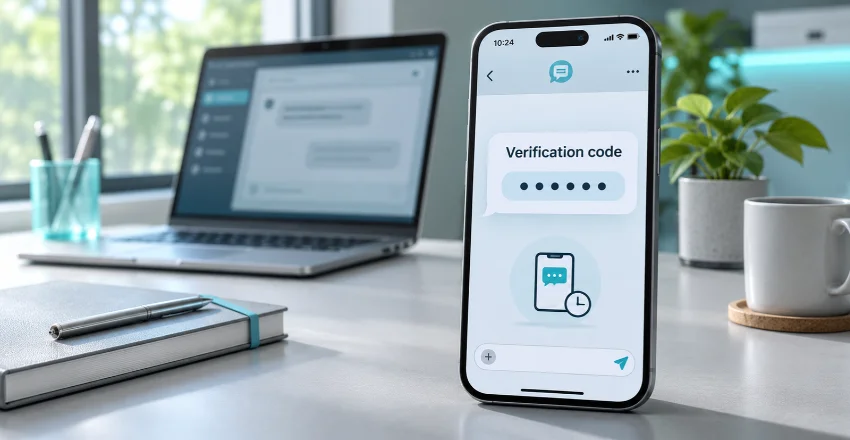
Your permanent mobile number offers continuity that a temporary number cannot provide. You retain access for future login codes, password recovery, and security alerts. That stability matters when an account will remain important for years. A temporary line offers better separation from your everyday identity in some situations. It can also reduce unwanted marketing messages reaching your main phone.
The trade-off is weaker continuity and unpredictable acceptance. For low-risk verification, separation may be worth that inconvenience. For long-term authentication, control matters more than disposability. Choose based on what happens if you need the same number again.
Better Options for Important Accounts
An authenticator app generates codes without relying on SMS delivery. It also avoids risks tied directly to cellular number transfers. Store any recovery codes somewhere protected in case your device becomes unavailable.
Passkeys are another strong option when the website supports them. They use cryptographic credentials rather than texted secrets. They can also provide stronger resistance to phishing than ordinary SMS codes.
Physical security keys offer another choice for higher-value accounts. They are especially useful for email, administrator accounts, and services that contain sensitive information. A permanent phone number can remain a backup when the platform requires one.
Frequently Asked Questions
Is a temp phone number for verification legal in the US?
Using a temporary number has legitimate purposes, including privacy protection and software testing. The important issue is what you do with the number. Never use one to impersonate someone, commit fraud, evade lawful restrictions, or violate a platform’s terms.
Can I get a free US number for an SMS code?
Some websites provide free shared US numbers whose incoming messages appear publicly. Those numbers can work for non-sensitive testing, but they offer little privacy. Never send confidential information or important recovery codes to a public inbox.
Why does a website reject my temporary phone number?
The platform may detect the line as VoIP, virtual, disposable, recycled, or heavily used. Services often apply these checks to reduce spam and account abuse. If temporary numbers are prohibited, use an accepted permanent number instead.
Can somebody else see my verification code?
They can if you use a shared public inbox. Anyone with access to that inbox may read incoming messages. A private rental reduces that exposure but still should not be used to secure sensitive accounts.
Can I keep using the same temporary US number?
That depends on the provider and rental type. One-time numbers may disappear after the first verification or after a short period. Longer rentals can provide more continuity, but they are still less dependable than a permanent line.
Should I use a temporary number for two-factor authentication?
Avoid it for long-term two-factor authentication on important accounts. Losing the number could prevent future logins or account recovery. An authenticator app, passkey, security key, or controlled permanent number is usually a safer choice.
Final Takeaway
Temporary US numbers can be useful privacy and testing tools when the account carries little long-term risk. Shared inboxes need special caution because other people can read incoming messages. Private rentals improve confidentiality but cannot guarantee that every platform will accept the number.
Match the phone number to the value of the account you are protecting. Keep temporary services away from banking, identity, healthcare, and critical recovery workflows. For important accounts, choose an authentication method you expect to control for years.