Walking Pad in 2026: Complete Guide to Benefits, Features, Walking Speed, Weight, City, and Space-Saving Design

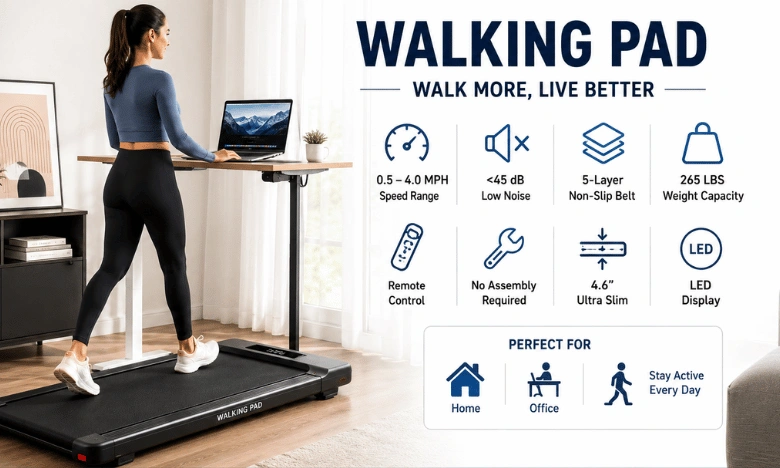
A walking pad looks like the simplest fitness purchase you will ever make. Then it arrives, your standing desk turns out to sit two inches too low, and the belt starts squeaking in month four. This guide covers the numbers that review roundups leave out, so you buy once instead of twice.
Walking Pad Specs at a Glance
| Spec | Typical range in 2026 | What to aim for |
| Price | $100 to $2,800 | $150 to $350 for desk use |
| Top speed | 2 to 7.5 mph | 4 mph is plenty without a handrail. |
| Belt width | 15 to 20 inches | 16.5 inches or wider |
| Belt length | 35 to 47 inches | Match it to your height; see below. |
| Weight capacity | 220 to 400 lbs | At least 60 lbs above your own weight |
| Motor | 0.75 to 3.5 HP | 2.25 HP for all-day walking |
| Motor noise | About 40 to 50 dB | Quieter than a normal conversation |
| Deck height | 4 to 6 inches | Add this to your desk math. |
| Warranty | Usually 1 year | Read the exclusions before you order. |
Key Takeaways
- The motor hum sits around 40 to 50 dB. Your footsteps are the noise your downstairs neighbor hears.
- Deck length, not top speed, is the spec that makes a cheap unit unusable for tall walkers.
- Consumer Reports found build quality problems across most units it tested, so brand support matters more than headline specs.
- Typing needs 0.5 to 1.5 mph. Reading tolerates 1.5 to 2.5 mph. Video calls work better paused.
- Lubrication is not optional, and skipping it is the usual reason a budget deck dies inside a year.
What $150 buys versus what $800 buys
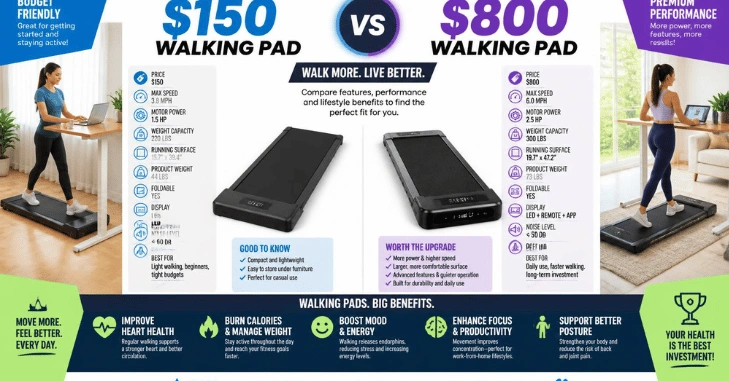
Prices we tracked across current 2026 roundups ran from roughly $100 to $2,800. Retailers file every one of them under the same under-desk treadmill label, so shoppers end up weighing a $120 mat against a $900 folding treadmill. That spread is not a quality ladder. It is four different products wearing one name.
| Tier | Price | What you get | Pros | Cons |
| Entry | $100 to $200 | 3.7 mph, 15- to 16-inch belt, light plastic shell | Cheap, easy to slide under a couch | Thin deck, short warranty, most complaints |
| Mid | $200 to $350 | 2.25 HP, 4 to 6 mph, 265 lb capacity, remote | Best value for a full workday | Incline is rare at this price. |
| Two in one | $350 to $600 | Folding handrail, 6 to 7.5 mph, jogging speeds | Doubles as a light running deck | Heavy and awkward to store |
| Commercial | $800 to $2,800 | Brushless motor, up to 400 lbs, lifetime frame cover | Built for shared offices | Overkill for one home desk |
The jump from entry to mid is the one worth paying for. The jump from mid to commercial mostly buys you a warranty. If you like reading the spec sheet before you shop, our desk gadgets and apps coverage takes the same approach to smaller purchases.
Seven specs that decide whether you keep using it
- Belt length. This is the one people regret. A 35-inch deck suits a short stride and nothing else.
- Belt width. Sixteen inches is the floor. Anything narrower and you spend the day steering.
- Weight capacity. Running the motor near its ceiling is how bearings die early.
- Motor rating. A 2.25 HP unit handles eight hours. A 0.75 HP unit handles twenty minutes.
- Deck height. Four to six inches of rise changes every deck measurement you already made.
- Controls. A remote you will lose, or a phone app you will keep. Pick honestly.
- Warranty and parts. Ask whether you can buy a replacement belt at all.
Consumer Reports tested a group of these units and reported build quality problems, sudden stops, and belts that tore. That finding does not appear on page one of most searches. It should change how you shop: put brand support and warranty ahead of headline specs, because a sudden stop at 3 mph is a fall, not an inconvenience. Our hardware buying guides apply the same rule to laptops and components.
How loud is the walking pad, really?
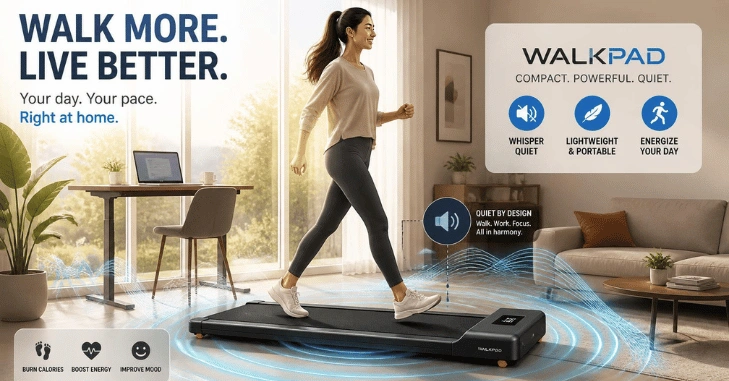
Quieter than you expected and louder than you hoped. The motor itself runs at roughly 40 to 50 dB, about the level of a refrigerator hum and well under the 60 dB of normal conversation. That is the easy part.
The hard part is your feet. Footstep impact travels through the floor as vibration, and in an apartment, that is what reaches the unit below. A dense equipment mat under the deck helps more than any spec on the box. Walking Pad: Walking at 1.5 to 2.5 mph in cushioned indoor sneakers helps too, and so does keeping the machine away from a wall you share.
Deck Size by Height
Nobody publishes this table, which is odd, because it decides whether the purchase works.
| Your height | Belt length to look for |
| Under 5 feet 10 inches | 38 to 40 inches |
| 5 feet 10 inches to 6 feet | 40 to 42 inches |
| 6 feet to 6 feet 2 inches | 43 to 45 inches |
| Over 6 feet 2 inches | 47 inches or more |
Walkers over 6 feet who buy a 40-inch deck end up shortening their stride to avoid the front roller. It feels fine for ten minutes. By hour three, it is the reason the machine goes back in the box.
Speeds that let you keep working
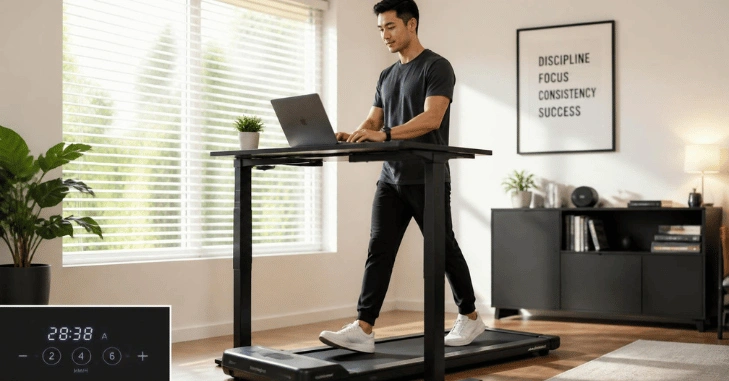
Speed is the setting most owners get wrong, usually by going too fast on day one.
- Typing: 0.5 to 1.5 mph. Your hands stay steady, and your error rate barely moves.
- Reading or listening: 1.5 to 2.5 mph. No fine motor control needed so that you can stride out.
- Video calls: 0.5 to 1 mph, or paused. Bobbing heads read as a distraction on camera.
Two hours at 1.2 mph beats twenty minutes at 3 mph, because you can do it every day without changing clothes.
Setup and upkeep nobody mentions
Do the desk height math before you order. A walking pad adds 4 to 6 inches under your feet, so your standing desk has to rise that much higher than its usual standing position. Measure your elbow height while standing on a stack of books at that thickness. Many budget sit-stand desks top out around 48 inches, which is where tall users run out of travel.
Maintenance is short and boring. Wipe the belt weekly, check that it sits centered, and apply silicone lubricant under the belt every three to six months depending on hours. A belt slipping under your heel is usually a tension or lubrication issue, not a dead motor, and it is the failure that ends most cheap units inside a year.
Carpet is workable but not ideal. A thick pile blocks the vents underneath and traps heat, so use a hard mat on top of the carpet rather than running the deck directly on it. Readers who like the setup detail will find more of it across our technology explainers.
Who Should Skip One
Plenty of people should not buy one.
- You already walk outside daily and enjoy it.
- Your work is drawing, CAD, or anything needing a steady hand.
- You live above a light sleeper and cannot fit a mat.
- Your desk does not adjust in height at all.
Standing alone burns very little more than sitting. If the goal is movement, a cheap deck you use daily beats a premium deck you fold away.
Our verdict
We recommend the $200 to $350 mid-tier for almost every home office. The Walking Pad: That range reliably gets you a 2.25 HP motor, a 265 lb capacity, roughly 4 to 6 mph, and a deck long enough for most adults. Buy from a brand with a real support line and a stocked parts page. Go cheaper only if you are short, light, and testing the habit. Go, dearer, only if two or more people will share the machine.
FAQ
Worth it if your desk already adjusts and you will use it for an hour or more most days. If it lives folded behind the sofa, it was an expensive coat rack
Most list 220 to 300 lbs, and a few commercial models reach 400 lbs. Treat the number as a limit, not a target, and leave yourself 60 lbs of headroom.
Yes, with a firm mat between the deck and the pile. Running it directly on thick carpet blocks airflow and makes the motor work harder.
Yes. Centering the belt, wiping it down, and lubricating every three to six months covers almost everything owners ever need to do.
They will hear your footsteps before they hear the motor. A dense mat, softer shoes, and a slower pace solve most complaints.