Creating Metaverse Avatars and Identity Systems Using Blockchain

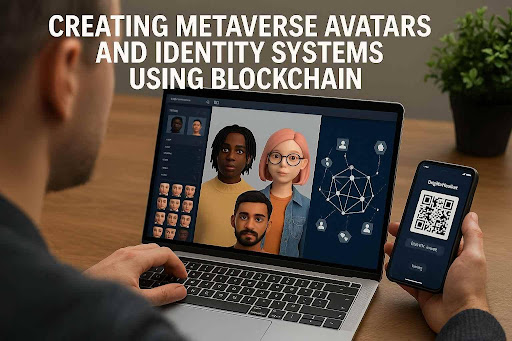
In the rapidly evolving landscape of digital realms, the concept of the metaverse is not only a buzzword but a burgeoning reality. Central to this virtual universe are avatars—digital personas that represent users in these immersive worlds. As we delve into the intricacies of creating avatars for the metaverse, the integration of blockchain technology plays a pivotal role in establishing secure, personalized, and interoperable identity systems.
The Essence of Virtual Avatars in the Metaverse
Virtual avatars are the linchpin of the metaverse experience. These 3D representations are not mere digital replicas; they embody the user’s persona and act as their conduit in the virtual universe. Avatars in the metaverse provide users with the freedom to express their individuality and creativity, transcending physical limitations.
The Significance of Avatars
Avatars are more than just images; they represent a person’s identity online. They let people show who they are or who they want to be, allowing for self-expression that goes beyond real-world limits. This makes avatars important for exploring identity and personal growth.
Avatars also help people connect with others. In virtual spaces, avatars serve as the face of interaction, helping users communicate, work together, and form relationships. This social aspect is crucial for building a community and sense of belonging in the metaverse.
Additionally, avatars help create an immersive experience in the metaverse. They give users a real presence in digital worlds, making it feel like they are part of the environment instead of just watching it. This sense of immersion is key to the attractiveness and success of the metaverse.
Customization and Personalization
The ability to customize avatars is a fundamental aspect of their appeal. Users can tailor their avatars to reflect their personal style, preferences, and interests. This customization extends to various aspects such as clothing, accessories, and even body features, allowing for a highly personalized digital identity.
Personalization is not just about aesthetics; it also involves the functionality of avatars. Users can equip their avatars with specific skills, tools, or attributes that align with their virtual objectives. This adaptability ensures that avatars can evolve alongside users’ needs and desires.
Furthermore, personalization fosters a deeper emotional connection between users and their avatars. When users see themselves reflected in their digital counterparts, it enhances their engagement and investment in the metaverse experience.
Avatars Beyond Gaming
Gaming is an important part of the metaverse, but avatars are useful in many other areas too. In business, avatars can help with virtual meetings, presentations, and conferences. They offer a lively option compared to regular video calls. This can improve remote work and team collaboration.
In education, avatars can be helpful learning tools. They can assist students during virtual lessons, give quick feedback, and create a fun learning environment. Using avatars in education might change how people learn and understand new information.
Additionally, avatars can change how we interact on social media. They can offer a richer and more real way for people to connect, share experiences, and express themselves. This could lead to a new way of networking online.
Creating Avatars for the Metaverse
The creation of avatars for the metaverse involves a sophisticated interplay of technology and artistic design. Metaverse character design services are at the forefront of this creative endeavor, offering tools and platforms to craft unique, lifelike avatars. From facial expressions to attire, every detail is meticulously designed to mirror the user’s personality and preferences.
The Art of Avatar Design
Avatar design mixes art and technology. Artists and designers collaborate to create attractive and realistic avatars that connect with users. This work involves knowing about human anatomy, fashion trends, and cultural details to make avatars relatable.
The design process considers the different needs and choices of users. Avatars are not the same for everyone; they must serve a variety of ages, genders, and cultures. This variety is important for making digital spaces that are inclusive and representative.
Additionally, avatar design goes beyond looks. It includes animation and expression too. Avatars are made to move naturally and show emotions through facial expressions and body language, making interactions in the metaverse feel more real.
Technological Innovations in Avatar Creation
The creation of avatars is powered by cutting-edge technologies that enhance their realism and functionality. 3D modeling software allows for the creation of detailed and lifelike avatars, while AI-driven customization provides users with unparalleled control over their digital personas.
AI technology plays a crucial role in personalization, enabling avatars to adapt to users’ preferences and behaviors. Machine learning algorithms can analyze user data to suggest avatar customizations, making the creation process intuitive and user-friendly.
Furthermore, advancements in virtual reality (VR) and augmented reality (AR) technologies are pushing the boundaries of avatar creation. These technologies enable immersive experiences where avatars can interact with real-world environments, blurring the lines between physical and digital realities.
Platforms and Tools for Avatar Creation
Numerous platforms and tools are available to assist users in creating their avatars. These platforms offer a range of customization options, from basic adjustments to advanced features for experienced users. They provide an accessible entry point for anyone looking to establish a presence in the metaverse.
Some platforms focus on simplicity, offering user-friendly interfaces and pre-designed templates for quick avatar creation. Others cater to more advanced users, providing comprehensive tools for intricate design and customization.
Additionally, open-source tools and community-driven platforms allow users to contribute to the evolution of avatar creation technologies. This collaborative approach fosters innovation and ensures that the tools remain relevant and adaptable to changing user needs.
The Role of Blockchain in Avatar Identity Systems
- Blockchain technology revolutionizes avatar identity systems by providing a decentralized and secure framework.
- Decentralized identity management allows for secure and distributed data storage across a network of nodes.
- Each avatar’s identity is represented by a unique cryptographic token, acting as a digital passport for authentication and ownership.
- Users maintain control over their digital identities, preventing unauthorized access and manipulation.
- Decentralization allows for interoperability, enabling users to transfer avatars and data across multiple platforms seamlessly.
- The security features of blockchain protect data through cryptography, ensuring it remains tamper-proof.
- Privacy is preserved, allowing users to engage anonymously in the metaverse without exposing personal information.
- Transparency in blockchain systems allows users to track data and interactions, fostering accountability and trust.
- Interoperability is enhanced through standardized protocols that facilitate data and asset exchanges between different platforms.
- Developers are working on universal standards for avatar identity systems for better recognition across virtual environments.
- Smart contracts on blockchain enable automated interactions and transactions, increasing the efficiency of virtual engagements.
Blockchain Development Services
A metaverse game development company is taking advantage of blockchain technology in order to improve both the functionality and security of digital avatars. By utilizing blockchain, they are able to create avatars that are not only more secure but also possess enhanced features. This innovative approach allows users to easily transfer their digital identities from one virtual environment to another without any hassle. As a result, players can enjoy a more cohesive experience, moving fluidly between different games and spaces within the metaverse while maintaining their unique avatar characteristics and personalized attributes.
Enhancing Game Mechanics with Blockchain
Blockchain technology is revolutionizing game mechanics by introducing new possibilities for interaction and engagement. Smart contracts enable automated actions and rewards, creating dynamic and interactive gaming experiences that adapt to players’ actions and decisions.
The use of blockchain also allows for the creation of unique and scarce in-game assets. Players can own and trade these assets, adding value and depth to the gaming experience. This ownership is secured through blockchain’s immutable ledger, ensuring that assets cannot be duplicated or tampered with.
Furthermore, blockchain enhances game security by protecting players’ data and assets. The decentralized nature of blockchain systems reduces the risk of hacking and data breaches, providing players with a secure and trustworthy gaming environment.
Interoperable Avatars and Cross-Platform Gaming
A big new trend in blockchain gaming is the use of interoperable avatars. These are characters that can move between different games and platforms while keeping their identity, items, and achievements. This ability makes cross-platform gaming more exciting.
With interoperable avatars, players can explore various virtual worlds without having to start over in each game. This makes the gaming experience better and encourages players to spend more time developing their avatars and digital identities.
Additionally, cross-platform gaming helps players work together and build communities. It allows them to connect and interact with others across different games, creating a more inclusive gaming world.
The Role of Blockchain in Game Development
Blockchain technology is having a significant impact not just on how players interact with games but also on the entire development process of these games. This innovative approach allows for a shift in traditional game design by creating ecosystems that emphasize transparency and fairness. By utilizing specialized blockchain game development services, developers are now able to construct game economies that are open and equitable, allowing players to have a meaningful role in influencing and determining the direction in which the game evolves over time. This collaborative environment fosters a sense of community and engagement among players, making them integral to the game’s ongoing journey.
Blockchain-based voting systems empower players to take part in crucial decision-making processes—like selecting new features or fine-tuning game mechanics. This player-driven approach builds a strong sense of ownership and community, boosting satisfaction and long-term loyalty.
Moreover, blockchain technology opens up innovative monetization opportunities. Through tokenization, developers can design in-game currencies and digital assets that players can trade or sell. These blockchain-powered assets not only enhance gameplay but also unlock fresh revenue streams and growth potential.
Interoperability and the Future of Metaverse Avatars
One of the most compelling aspects of blockchain-enabled avatars is their interoperability. In the metaverse, users can navigate through different virtual worlds without losing their identity or possessions. This seamless integration is made possible by blockchain’s ability to authenticate and transfer digital assets across platforms.
The Evolution of Metaverse Characters
As the metaverse continues to evolve, so too do the characters that inhabit it. Metaverse avatars are becoming increasingly sophisticated, with enhanced capabilities for interaction, communication, and personalization. The integration of blockchain technology ensures that these characters remain secure and adaptable as new features and virtual environments emerge.
The Role of Interoperability in Metaverse Expansion
Interoperability is a driving force behind the expansion of the metaverse. By enabling avatars to move freely between different platforms, interoperability creates a unified and cohesive digital ecosystem. This integration is essential for attracting users and fostering engagement across diverse virtual environments.
The seamless transition of avatars and assets between platforms enhances user experience and satisfaction. It allows users to maintain their digital identities and possessions, reducing the barriers to entry for exploring new virtual worlds. This accessibility is crucial for the growth and sustainability of the metaverse.
Moreover, interoperability fosters collaboration and innovation among developers. By creating standardized protocols and frameworks, developers can build on each other’s work and create interconnected experiences that enhance the overall metaverse ecosystem.
The Potential of Blockchain in Metaverse Development
Blockchain’s potential in metaverse development extends beyond avatars and identity systems. The technology can facilitate the creation of decentralized virtual worlds, where users have control over their environments and interactions. This decentralization empowers users and promotes a more democratic and inclusive metaverse.
Blockchain also enables new economic models within the metaverse. Through tokenization, users can own and trade virtual assets, creating new opportunities for entrepreneurship and commerce. These digital economies can drive innovation and growth, attracting more users and investment to the metaverse.
Furthermore, blockchain’s transparency and security are crucial for building trust in the metaverse. As users navigate complex virtual environments, they need assurance that their data and assets are protected. Blockchain provides this assurance, creating a safe and reliable foundation for metaverse development.
Challenges and Considerations
While the integration of blockchain into avatar identity systems presents numerous advantages, it also poses challenges. The complexity of blockchain technology requires a certain level of technical expertise, both for developers and users. Additionally, the scalability of blockchain networks remains a topic of ongoing research and development.
Technical Challenges in Blockchain Integration
The integration of blockchain technology into avatar systems presents several technical challenges. One of the primary concerns is scalability, as blockchain networks must accommodate a growing number of users and transactions. This requires ongoing research and innovation to enhance the efficiency and capacity of blockchain systems.
Another challenge is the complexity of blockchain technology, which can be a barrier for both developers and users. Developers need specialized knowledge and skills to implement blockchain solutions effectively, while users may require education and support to navigate blockchain-enabled environments.
Furthermore, blockchain’s decentralized nature can lead to interoperability issues between different systems and platforms. Developers must work towards creating standardized protocols and frameworks to ensure seamless integration and communication across the metaverse.
Ethical and Privacy Concerns
The implementation of blockchain in avatar systems raises ethical and privacy considerations. Ensuring user consent and transparency in data management is paramount. Developers and metaverse platforms must prioritize user rights and data protection to maintain trust within the community.
Regulatory and Legal Considerations
The use of blockchain in avatar identity systems also raises regulatory and legal considerations. As digital identities and assets become more valuable, there is a need for clear legal frameworks to govern their use and ownership. This requires collaboration between regulators, developers, and users to create policies that protect user rights and promote innovation.
The global nature of the metaverse adds complexity to regulatory efforts, as different jurisdictions may have varying laws and standards. This necessitates international cooperation and dialogue to establish common guidelines and best practices for blockchain-enabled identity systems.
Additionally, the evolving nature of blockchain technology means that regulations must be adaptable and forward-thinking. Regulators must balance the need for oversight with the flexibility to accommodate new developments and innovations in the blockchain and metaverse space.
Social Implications of Blockchain-Enabled Avatars
The widespread adoption of blockchain-enabled avatars has social implications that must be considered. As digital identities become more integrated into daily life, there is a risk of digital divides and inequalities. Ensuring equitable access to the metaverse and its opportunities is crucial for promoting inclusivity and diversity.
Moreover, the use of avatars raises questions about identity and authenticity. As individuals experiment with different personas, there is a need for discussions about the nature of identity and the impact of digital representation on self-perception and social interactions.
The social implications of blockchain-enabled avatars also extend to issues of governance and control. As users navigate decentralized virtual worlds, questions about decision-making processes and power dynamics arise. Addressing these issues requires thoughtful consideration and collaboration among stakeholders.
The Impact on Gaming and Beyond
The implications of blockchain-enabled avatars extend beyond gaming. These digital identities have the potential to revolutionize social interactions, commerce, and even education within the metaverse. As avatars become more integrated into our digital lives, they will shape the way we interact, communicate, and engage with virtual environments.
Engaging the Gaming Community
For game developers, journalists, and content managers, understanding the intricacies of avatar creation and blockchain technology is crucial. By engaging the gaming community in discussions about these advancements, stakeholders can foster innovation and collaboration, driving the evolution of the metaverse forward.
Transforming Social Interactions
Blockchain-enabled avatars have the potential to transform social interactions in profound ways. They offer a new medium for connection and communication, allowing users to engage in immersive and authentic experiences. This can lead to deeper and more meaningful relationships within the digital realm.
Avatars also enable new forms of expression and creativity, as users can experiment with different identities and personas. This flexibility encourages exploration and discovery, enriching social interactions and fostering a sense of belonging in virtual communities.
Moreover, blockchain technology enhances trust and security in social interactions. Users can verify the authenticity of avatars and their interactions, reducing the risk of deception and enhancing the integrity of digital relationships.
Revolutionizing Commerce and Education
The integration of blockchain-enabled avatars into commerce and education has the potential to drive significant change. In commerce, avatars can facilitate virtual shopping experiences, personalized recommendations, and secure transactions. This creates new opportunities for businesses and consumers to engage in digital marketplaces.
In education, avatars can serve as interactive learning tools, providing personalized instruction and feedback. They can create immersive educational environments that enhance student engagement and motivation, leading to improved learning outcomes and experiences.
Furthermore, blockchain technology can support credentialing and certification processes, ensuring the authenticity and recognition of educational achievements. This can open up new pathways for lifelong learning and professional development in the digital age.
The Future of Digital Identity
As blockchain-enabled avatars become more prevalent, they will shape the future of digital identity. These identities will transcend traditional boundaries, offering new ways for individuals to interact with technology and each other. This evolution requires a reimagining of identity, privacy, and security in the digital realm.
The future of digital identity will be characterized by personalization, interoperability, and user empowerment. Avatars will become central to our digital experiences, serving as the gateway to the metaverse and beyond. This transformation will have far-reaching implications for society, culture, and technology.
Conclusion
The creation of metaverse avatars and identity systems using blockchain represents a paradigm shift in the way we perceive and interact with digital environments. As the metaverse continues to expand, the role of avatars will become increasingly significant, serving as the bridge between the physical and virtual worlds. By embracing blockchain technology, we can ensure that these digital identities remain secure, customizable, and interoperable, paving the way for a more immersive and interconnected future.