Technology

Pixel 7a vs Pixel 7: Full Specs, Camera and Value Compared

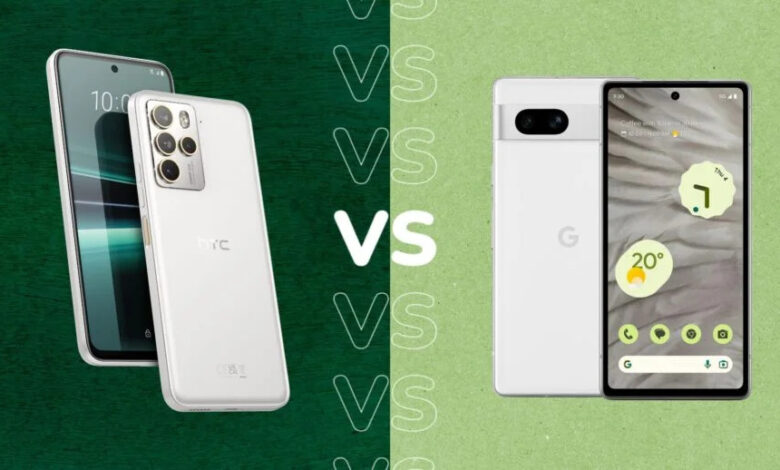
Google’s Pixel 7a and Pixel 7 launched seven months apart and share the same processor, the same clean version of Android and much of the same camera software — which is exactly why choosing between them is harder than it looks. The Pixel 7 arrived in October 2022 at $599 as Google’s mainstream flagship. The Pixel 7a followed in May 2023 at $499 and borrowed so much from it that the two overlapped almost completely.

Both phones have since been discontinued, so in 2026 this is a used and refurbished buying decision rather than a retail one — and that changes the answer. This guide breaks down every meaningful difference between the Pixel 7a vs 7: build, display, thermals, cameras, charging, storage, audio and, most importantly for a phone this age, how much software support each one has left.

Pixel 7a vs Pixel 7: The Short Answer

  • Buy the Pixel 7 if you want the more durable phone (glass back, IP68), a brighter and larger screen, faster and reverse wireless charging, better sustained performance, and the option of 256GB of storage.
  • Buy the Pixel 7a if you want the cheaper phone, prefer a smaller and lighter body, and want the longer software support window — the 7a is supported roughly seven months longer than the 7.
  • Skip both if you need a phone that will still get Android version upgrades several years from now. At that point a Pixel 8a or newer is the better spend.

Full Specification Comparison

Specification Google Pixel 7a Google Pixel 7
Launch date May 2023 October 2022
Launch price (128GB) $499 $599
Display 6.1-inch OLED, 1080 x 2400, 90Hz 6.3-inch OLED, 1080 x 2400, 90Hz, HDR10+
Front glass Corning Gorilla Glass 3 Corning Gorilla Glass Victus
Back panel Plastic (composite) Gorilla Glass Victus
Frame Aluminum Aluminum
Water resistance IP67 IP68
Chipset Google Tensor G2 (IPoP packaging) Google Tensor G2 (FOPLP packaging)
Memory 8GB RAM 8GB RAM
Storage 128GB only 128GB or 256GB
Main camera 64MP f/1.9, 1/1.73-inch sensor, OIS 50MP f/1.85, 1/1.31-inch sensor, OIS
Ultra-wide 13MP f/2.2, 120-degree field of view 12MP f/2.2, 114-degree field of view
Selfie camera 13MP f/2.2 10.8MP f/2.2
10-bit HDR video No Yes
Battery 4,385mAh 4,355mAh
Wired charging 18W 20W
Wireless charging 7.5W Up to 20W (Pixel Stand)
Reverse wireless charging No Yes (Battery Share)
Microphones Two Three
Dimensions 152 x 72.9 x 9.0 mm 155.6 x 73.2 x 8.7 mm
Weight 193.5g 197g
Update support ends May 2028 October 2027

Design and Build Quality

The clearest hardware gap between the Pixel 7a vs 7 is what you are actually holding. The Pixel 7 uses Gorilla Glass Victus on both the front and the back, wrapped in a polished aluminum frame and the now-signature camera visor. The Pixel 7a pairs an aluminum frame with a composite plastic back and older Gorilla Glass 3 up front.

In practice that means two things. The Pixel 7 feels noticeably more premium and its front glass is far more scratch-resistant — Gorilla Glass Victus is several generations ahead of Glass 3. The Pixel 7a’s plastic back, on the other hand, is more forgiving in a drop and cheaper to live with, since a cracked composite panel is a cosmetic problem rather than a repair bill.

Water resistance also splits the two. The Pixel 7 carries an IP68 rating (immersion to roughly 1.5m for 30 minutes), while the Pixel 7a is rated IP67 (1m for 30 minutes). Both survive rain and spills; only the Pixel 7 is rated for deeper submersion.

Size is the one area where the 7a arguably wins. At 152mm tall and 193.5g it is shorter and marginally lighter than the 197g Pixel 7, which makes it the easier phone to use one-handed — though it is also 0.3mm thicker.

Display: Same Resolution, Different Brightness

Both phones use a 1080 x 2400 OLED panel running at 90Hz, so scrolling and color reproduction feel near-identical side by side. The differences are size and peak brightness.

The Pixel 7’s panel measures 6.3 inches to the Pixel 7a’s 6.1 inches, and it pushes considerably higher peak brightness — independent measurements put the Pixel 7 at around 1,400 nits against roughly 1,050–1,100 nits for the 7a. That gap only matters in direct sunlight, but outdoors it is the single most noticeable display difference. The Pixel 7 also supports HDR10+ content.

The Pixel 7a additionally carries slightly thicker bezels, particularly along the bottom chin. It is a small aesthetic point, but it is the kind of detail that makes the 7a read as the cheaper phone even before you pick it up.

Processor and Sustained Performance

Both phones run Google’s Tensor G2, an 8-core 5nm chip paired with a Mali-G710 MP7 GPU and 8GB of RAM. On paper they are identical, and in short bursts — app launches, browsing, photo processing — they perform identically too.

The difference is in how the chip is packaged. The Pixel 7 uses a thinner FOPLP (fan-out panel-level packaging) version of Tensor G2, while the Pixel 7a uses the cheaper, thicker IPoP (integrated package-on-package) variant. The thicker package dissipates heat less efficiently, which means the 7a warms up faster and throttles sooner under sustained load such as long gaming sessions, 4K video recording or extended camera use.

For everyday use — messaging, social apps, streaming, navigation — you will not notice this. For anything that keeps the chip busy for more than ten or fifteen minutes, the Pixel 7 holds its performance better and stays cooler in the hand.

Camera Quality: Higher Megapixels Are Not the Whole Story

This is where the spec sheet misleads people most often. The Pixel 7a has a 64MP main camera and the Pixel 7 has a 50MP one, which reads like a win for the cheaper phone. It is not that simple.

The Pixel 7’s 50MP sensor is physically larger — 1/1.31 inches versus 1/1.73 inches on the 7a. A bigger sensor gathers more light, which is why the Pixel 7 pulls ahead in low light, produces cleaner shadows and delivers more natural background separation in portrait mode. The 7a’s higher pixel count can resolve slightly more fine detail in good daylight, but both phones bin their output down (to roughly 12.5MP and 16MP respectively), so the advantage rarely survives to the final image.

Where the Pixel 7 clearly wins:

  • Low-light and Night Sight — the larger sensor and laser-assisted autofocus produce faster locks and cleaner results after dark.
  • 10-bit HDR video — supported on the Pixel 7, absent on the Pixel 7a.
  • Portrait bokeh — shallower natural depth of field from the bigger sensor.

Where the Pixel 7a wins:

  • Ultra-wide framing — a 120-degree field of view against the Pixel 7’s 114 degrees, plus 13MP instead of 12MP.
  • Selfies — a 13MP front camera versus 10.8MP on the Pixel 7.
  • Daylight detail — a marginal edge in bright, static scenes.

Crucially, both phones run the same Google camera pipeline: Magic Eraser, Real Tone, Photo Unblur, Night Sight and Super Res Zoom all behave the same way. In good light, most people cannot reliably tell the two apart in a blind comparison. The gap opens up as the light drops.

Battery Life and Charging

Battery capacity is effectively a tie: 4,385mAh in the Pixel 7a and 4,355mAh in the Pixel 7. Neither is a two-day phone, and both comfortably clear a full day of ordinary use. Because the 7a drives a slightly smaller screen, real-world endurance between them is close enough to call even.

Charging is not close. The Pixel 7 supports 20W wired charging and up to 20W wireless charging on Google’s Pixel Stand, plus reverse wireless charging (Battery Share) for earbuds and watches. The Pixel 7a is limited to 18W wired and 7.5W wireless, and has no reverse wireless charging at all.

The wired difference is minor — a handful of minutes over a full charge. The wireless difference is substantial, and if you charge on a pad overnight or top up at a desk, the Pixel 7 is meaningfully more convenient.

Storage, Audio and Haptics

The Pixel 7a ships in a single 128GB configuration with no microSD expansion. The Pixel 7 offers 128GB or 256GB, which matters more than it used to now that these are used phones — a 256GB Pixel 7 often sells for barely more than a 128GB one.

The Pixel 7 also has three microphones to the 7a’s two, which improves call clarity and noise rejection during video recording, and its stereo speakers are the fuller-sounding pair. Its haptic motor is the more precise of the two as well: typing and notifications feel crisper on the Pixel 7, where the 7a’s vibration is slightly buzzier.

Software Support: The Deciding Factor in 2026

Both phones shipped with Android 13, both received the same major Pixel Feature Drops, and both have been upgraded to Android 16. Google extended the Pixel 7 series to five years of OS and security updates measured from each device’s Google Store launch, which gives the two very different runways:

  • Pixel 7 — supported to October 2027.
  • Pixel 7a — supported to May 2028.

That roughly seven-month advantage is the Pixel 7a’s strongest argument, and it is the reverse of the usual flagship-versus-A-series logic. If you plan to keep the phone until it stops receiving security patches, the cheaper device is the one that lasts longer.

It is worth being clear-eyed about what remains, though: neither phone has years of Android version upgrades ahead of it. Both are now in the security-patch phase of their lives.

Price and Value in 2026

At launch the Pixel 7a undercut the Pixel 7 by $100 — $499 against $599 — and that gap defined the comparison. On the second-hand and refurbished market the pricing has compressed dramatically, and the two now sit within a much narrower band of each other.

When the difference is small, the Pixel 7 is the better buy: you get the glass build, IP68, the brighter screen, faster wireless charging, a 256GB option and better thermals for very little extra. When the Pixel 7a is clearly cheaper, it remains an excellent value phone with the same processor, the same camera software and a longer support window.

Whichever you choose, buy from a seller that states battery health and confirms the phone is not carrier-locked. On a phone this age, battery condition affects daily experience far more than any spec on this page.

Which One Should You Choose?

Choose the Pixel 7 if: you want the more durable, more premium phone; you shoot a lot in low light or record video; you charge wirelessly; you want more than 128GB; or you play games and want the phone to stay cool.

Choose the Pixel 7a if: price is the deciding factor; you want a smaller, lighter phone; you take a lot of selfies or ultra-wide shots; or you want the longest possible security-update window from the Pixel 7 generation.

Consider stepping up instead if: you want several more years of Android version upgrades. A Pixel 8a or newer costs more but carries a support commitment that neither of these phones can match.

Conclusion

The Pixel 7 is the better phone in almost every hardware respect: build materials, water resistance, screen brightness, thermal behavior, low-light photography, charging speed and storage options. The Pixel 7a closes the gap in every area that is driven by software, matches it on processor and battery, beats it on selfies and ultra-wide framing, and outlasts it on update support.

If the price difference is small, take the Pixel 7. If it is significant, the Pixel 7a gives up remarkably little. Either way, both remain capable phones running a clean, well-supported version of Android — just check how much support runway is left before you commit.

If you are still weighing up which platform suits you before choosing a handset, our guide to the difference between Android and iOS operating systems is a useful next read, and you will find more comparisons like this one in our Technology category.

Frequently Asked Questions

What is the main difference between the Pixel 7a and Pixel 7?

Build quality and camera hardware. The Pixel 7 has a Gorilla Glass Victus back with an IP68 rating and a larger 50MP main sensor, while the Pixel 7a uses a plastic back, Gorilla Glass 3, an IP67 rating and a smaller 64MP sensor. The Pixel 7 also charges faster and offers more storage.

Is the Pixel 7a camera better than the Pixel 7?

No, despite the higher megapixel count. The Pixel 7’s 50MP sensor is physically larger (1/1.31 inches versus 1/1.73 inches), so it captures more light and performs better in low light and portrait mode. The Pixel 7a does have a wider ultra-wide lens and a higher-resolution selfie camera.

Do the Pixel 7a and Pixel 7 use the same processor?

Yes, both use the Google Tensor G2 with 8GB of RAM. The Pixel 7 uses a thinner FOPLP package that manages heat better, so it sustains performance longer under load, while the Pixel 7a throttles sooner.

Which phone gets software updates for longer?

The Pixel 7a. Google supports the Pixel 7 until October 2027 and the Pixel 7a until May 2028, because support is measured five years from each phone’s launch and the 7a launched seven months later.

Does the Pixel 7a support wireless charging?

Yes, but only at 7.5W, and it does not support reverse wireless charging. The Pixel 7 supports up to 20W wireless charging on a Pixel Stand and can wirelessly charge accessories using Battery Share.

How much storage does the Pixel 7a have?

128GB, and that is the only configuration available — there is no microSD slot. The Pixel 7 was sold in both 128GB and 256GB versions.

Are the Pixel 7a and Pixel 7 still worth buying in 2026?

As budget used or refurbished phones, yes. Both run Android 16, still receive security patches and deliver Google’s full camera software experience. If you need a phone that will keep receiving major Android version upgrades for years, a newer A-series Pixel is the better choice.

What are the display differences between the Pixel 7a and Pixel 7?

Both are 1080 x 2400 OLED panels at 90Hz. The Pixel 7’s is 6.3 inches and reaches roughly 1,400 nits peak brightness with HDR10+ support; the Pixel 7a’s is 6.1 inches, peaks at around 1,050–1,100 nits and has slightly thicker bezels.

Uzma Sagheer

Uzma Sagheer focuses on delivering the latest advancements in the world of technology, covering trends, gadget reviews, and insightful tech news. Her content ranges from detailed analyses of new tech products to in-depth tutorials on utilizing innovative tools. Uzma also highlights emerging technologies such as AI, blockchain, and cybersecurity, providing readers with a comprehensive understanding of how tech is shaping the future.

Related Articles

Back to top button