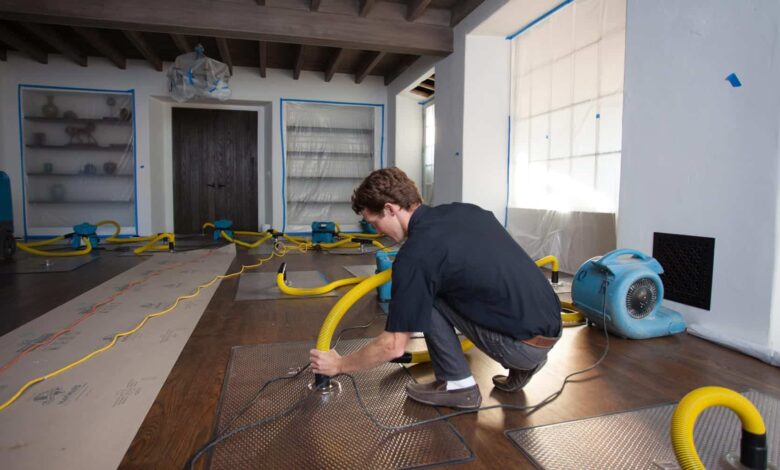
Water damage restoration for a basement follows a fixed order: make the space safe, stop the source, remove standing water, dry the structure with air movers and dehumidifiers, clean and prevent mold, then repair and waterproof. Speed matters most, because mold can start growing within 24 to 48 hours of materials getting wet.
Whether the cause is a storm, a burst pipe, a failed sump pump or a sewer backup, the steps below show what you can safely handle yourself, where professional damage restoration crews earn their fee, and how to stop the same flood from happening again.
What Basement Water Damage Restoration Involves
Basements sit below grade, so water reaches them from more directions than any other room: through the walls, up through the slab, down from plumbing above and back through floor drains. Restoration means more than mopping up. It covers finding and stopping the source, extracting water, drying hidden moisture inside walls and floors, removing materials that cannot be saved, sanitizing, and rebuilding with materials that tolerate damp conditions better.
Skipping any stage usually shows up later as a musty smell, peeling paint, warped flooring or mold behind drywall. The aim is not just a basement that looks dry, but one where moisture readings in walls and subfloors are back to normal.
Know Your Water Type Before You Start
Restoration professionals classify water by contamination level, based on the IICRC S500 standard. The category decides whether DIY cleanup is reasonable.
| Category | Typical source | What it means for you |
|---|---|---|
| Category 1 (clean) | Supply line break, water heater leak, rainwater from a window well | Generally safe for careful DIY if dried quickly |
| Category 2 (gray) | Washing machine or dishwasher overflow, sump pump failure | Contains contaminants; wear protective gear and discard porous items |
| Category 3 (black) | Sewer backup, outdoor floodwater, river or groundwater flooding | Hazardous; professional cleanup strongly recommended |
Clean water does not stay clean. After a day or two in contact with building materials and dust, Category 1 water can degrade to Category 2, which is another reason to move fast.
Common Causes of Basement Water Damage
- Heavy rain and surface flooding: intense or prolonged rain overwhelms drainage and pushes water through walls, window wells and the slab joint.
- Plumbing failures: burst pipes, failed water heaters, leaking washing machine hoses and broken supply lines.
- Sump pump failure: a stuck float, a burned-out motor or a power outage during a storm.
- Foundation cracks: even hairline cracks let groundwater in when the soil around the house is saturated.
- Poor grading and gutters: clogged gutters, short downspouts and soil sloping toward the house pool water against the foundation.
- Sewer backup: overloaded municipal lines or a blocked main can push sewage up through floor drains.
Identify the cause before restoration begins. There is no point drying a basement that is still taking on water.
Step 1: Make the Basement Safe
A flooded basement can be dangerous. Put safety ahead of the cleanup process:
- Cut the power: switch off electricity to the basement at the main panel, but only if you can reach the panel without standing in water. If you cannot, call your utility or an electrician.
- Check for gas: if you smell gas, leave the house at once and call your gas utility from outside.
- Wear protective gear: rubber gloves, waterproof boots, eye protection and an N95 or better respirator, especially with gray or black water.
- Check the structure: stay out if walls are bowing, the ceiling is sagging or the floor has heaved.
- Document everything: photograph and video the water level and damaged items before you move anything. Your insurer will want this.
Step 2: Stop the Source and Remove Standing Water
Shut off the main water valve if a pipe or appliance is leaking. Then remove water as quickly as possible. The right method depends on depth:
| Water depth | Best tool | Notes |
|---|---|---|
| Damp or under 1 inch | Wet/dry vacuum, mops, squeegee | Fine for DIY; empty the vacuum often |
| 1 to 12 inches | Submersible utility pump plus wet/dry vacuum | Discharge hose well away from the foundation |
| Over 12 inches or sewage | Professional truck-mounted extraction | Pump down gradually if groundwater is high to avoid wall pressure damage |
If your sump pump is working, confirm the discharge line is clear. If it has failed, a rented or purchased submersible pump can bridge the gap. For deep water, avoid pumping it all out in one go when the ground outside is still saturated; removing water too quickly can let soil pressure crack or push in the walls.
When the job is beyond a wet vac, searching for water damage restoration near me will connect you with crews that bring commercial extractors, moisture meters and drying equipment, and that can work directly with your insurance adjuster.
Step 3: Dry the Basement Thoroughly
Surface water is only the start. Concrete, framing and drywall hold moisture long after the floor looks dry. Effective drying combines three things:
- Air movement: point fans or air movers across wet surfaces, not just into the room. Open windows only if the outdoor air is drier than indoors.
- Dehumidification: run one or more dehumidifiers continuously and empty or drain them. Large basements may need commercial units.
- Gentle heat: warm air holds more moisture and speeds evaporation. Use heaters cautiously and never near standing water.
- Open up wet cavities: cut drywall a foot or two above the water line and pull out wet insulation so wall cavities can dry.
Drying a flooded basement typically takes several days, often two to seven with proper equipment. Use a moisture meter to confirm that drywall, framing and the slab have returned to normal readings before closing anything up. A room that feels dry can still hold enough moisture to grow mold.
Step 4: Clean and Prevent Mold Growth
Mold can begin growing within 24 to 48 hours. The EPA guidance on mold recommends drying water-damaged areas and items within that window. To keep it from taking hold:
- Discard soaked porous items: carpet pad, upholstered furniture, cardboard boxes, mattresses and fiberglass insulation rarely recover, especially after gray or black water.
- Clean hard surfaces: scrub concrete, tile and sealed surfaces with detergent and water, then disinfect. Never mix bleach with ammonia or other cleaners.
- Inspect hidden areas: look behind baseboards, under flooring and inside wall cavities for moisture and early mold.
- Treat vulnerable framing: once dry, antimicrobial products can be applied to exposed wood before rebuilding.
If you see mold covering a large area, or anyone in the home has asthma, allergies or a weakened immune system, bring in a professional mold remediation company and talk to a doctor about any symptoms.
Step 5: Repair and Restore Damaged Areas
Once moisture readings are normal and the space is clean, rebuild with an eye to the next leak:
- Drywall: replace the cut sections; consider moisture-resistant or paperless drywall for basement walls.
- Flooring: swap carpet or laminate for luxury vinyl plank, tile or sealed concrete, which tolerate occasional water much better.
- Insulation: rigid foam board against foundation walls holds up better than fiberglass batts.
- Foundation cracks: seal small cracks with hydraulic cement or an injection kit; have a structural engineer or foundation specialist assess wide, growing or horizontal cracks.
- Mechanical systems: have a licensed electrician check any wiring, outlets or panels that got wet, and a technician inspect the furnace and water heater.
Step 6: Prevent Future Basement Flooding
- Maintain the sump pump: test it every few months by pouring water into the pit, and add a battery backup or water-powered backup pump.
- Fix exterior drainage: clean gutters, extend downspouts several feet from the foundation and regrade soil so it slopes away from the house.
- Seal and waterproof: seal cracks and consider interior drainage systems or exterior waterproofing for recurring seepage.
- Install a backwater valve: this helps stop sewage backing up through floor drains during heavy storms.
- Control humidity: run a dehumidifier to keep relative humidity below about 50%.
- Add water alarms: inexpensive leak sensors near the water heater, washer and sump pit give early warning.
DIY vs Professional Restoration
| Situation | DIY reasonable? | Why |
|---|---|---|
| Small clean-water leak caught within hours | Yes | Limited area, low contamination, quick drying possible |
| Water over an inch across a finished basement | Usually call a pro | Wet walls and subfloors need professional drying and moisture mapping |
| Sewage or outdoor floodwater | No | Health hazard; requires protective equipment and disinfection protocols |
| Visible mold over a large area | No | Removal can spread spores without containment |
| Structural cracks or bowing walls | No | Needs a structural engineer or foundation specialist |
Insurance Tips
Coverage depends entirely on your policy. Standard homeowners insurance often covers sudden and accidental water damage, such as a burst pipe, but usually excludes flooding from surface water. Flood coverage is typically a separate policy, such as through the National Flood Insurance Program, and sewer or sump backup is often an add-on endorsement. Call your insurer early, keep receipts for equipment and cleanup, and do not throw away damaged items until the adjuster has seen them or approved disposal.
FAQs
How long does it take to dry out a flooded basement?
Drying usually takes about two to seven days with fans and dehumidifiers, depending on how much water got in, humidity and temperature. Use a moisture meter to confirm walls and floors are dry before rebuilding.
Can I use bleach to clean after basement flooding?
A diluted bleach solution can disinfect hard, non-porous surfaces, but it does not fix porous materials such as drywall or wood, which may need replacement. Never mix bleach with ammonia or other cleaners.
When should I call a professional for basement water damage?
Call a professional if water is deep, contaminated with sewage or floodwater, has soaked into finished walls, or if you see widespread mold or structural damage. Pros have extraction and drying equipment and can document damage for insurance.
How do I stop my basement flooding again?
Keep gutters clear, extend downspouts, grade soil away from the foundation, maintain a sump pump with backup power, seal cracks and run a dehumidifier. A backwater valve helps prevent sewer backups.
Does homeowners insurance cover basement water damage?
It depends on the cause and your policy. Sudden plumbing failures are often covered, while surface flooding usually needs separate flood insurance and sewer backup may need an endorsement.
How quickly does mold grow after a basement floods?
Mold can begin growing within 24 to 48 hours on wet materials. Removing water and starting drying immediately is the best way to prevent it.
Bottom Line
Act within the first 24 to 48 hours: make the space safe, stop the water, extract it, dry the structure until moisture readings are normal, and discard what cannot be saved. Small clean-water leaks are manageable on your own, but sewage, deep water, mold or structural damage call for professionals. Then fix drainage and sump protection so you only go through this once.
For more practical reading on a different topic, see our guide to the 10 benefits of pest control to agricultural industries, or browse the Daily Bites category.