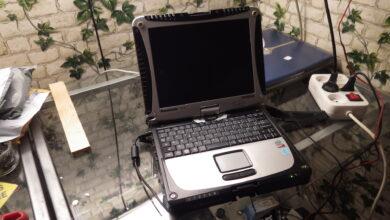
The sticker price of a fully rugged laptop is two to three times that of a comparably specified consumer machine, and that gap is where most procurement conversations begin and end. Looked at narrowly, the math seems unfavorable. Looked at across the actual operational lifecycle, the math reverses. For organizations deploying mobile computing into field service, utilities, public safety, manufacturing, oil and gas, construction, and similar environments, rugged laptops consistently produce a lower total cost of ownership than consumer hardware once failure rates, downtime costs, and replacement cycles are calculated honestly. Understanding the full financial picture is the foundation of a procurement decision that holds up under operational pressure rather than just budget review.
The Hidden Cost of Failure
Industry studies of mobile computing in field environments consistently report consumer laptop failure rates between fifteen and twenty percent annually when deployed into industrial, outdoor, or high-mobility contexts. Fully rugged units, deployed into the same environments, typically report annual failure rates between three and five percent. The difference is not marginal. Across a fleet of one hundred devices, the consumer hardware approach generates fifteen to twenty replacement events per year, while the rugged approach generates three to five.
Each failure event carries direct and indirect costs. The direct cost includes the replacement device, the IT labor required to configure and deploy it, and the data recovery effort if the failed unit was not backed up cleanly. The indirect cost, often larger, includes the productive time lost while the field worker waits for replacement hardware, the operational delay on whatever job the device was supporting, and in some cases the cost of returning to a job site to complete work that could not be finished when the laptop failed.
Calculating Downtime Cost
The financial logic becomes clearer when downtime is assigned a monetary value. A field service technician earning a fully loaded labor rate of one hundred dollars per hour generates approximately eight hundred dollars of capacity per shift. A laptop failure that costs four hours of productive time, between troubleshooting, return to office for replacement, and reconfiguration, represents four hundred dollars of direct labor cost plus whatever revenue or operational value that technician would have produced during those hours. A single significant failure can easily exceed the price gap between a consumer and a rugged unit.
Multiply this across a fleet over a three-to-five-year deployment cycle, and the cumulative cost difference between the two approaches typically favors rugged hardware by a meaningful margin. The exact calculation depends on labor rates, the operational impact of downtime, and the specific environmental stresses on the equipment, but the directional finding is consistent across most deployment contexts.
Replacement Cycles and Lifecycle Length
Consumer laptops deployed into demanding environments rarely complete a full warranty period without intervention, and most are replaced within two to three years either due to failure or because cumulative repair costs no longer justify retention. Fully rugged laptops, designed for five-to-seven-year deployment cycles, often complete that full lifecycle with only routine maintenance, battery replacements, and occasional component refresh.
Spreading the acquisition cost across a longer useful life reduces the annualized cost meaningfully. A two-thousand-dollar consumer unit replaced every two and a half years carries an annualized cost of eight hundred dollars before failure costs are added. A four-thousand-dollar rugged unit deployed for six years carries an annualized cost of approximately six hundred and sixty-seven dollars before the lower failure rate is even considered.
Standardization and Support Costs
Rugged laptop fleets also tend to produce lower support costs because the hardware is more standardized, parts and accessories remain available across longer product lifecycles, and the failure modes are more predictable. Consumer-grade fleets often span multiple models, generations, and configurations, generating support complexity that consumes IT resources disproportionate to the underlying device cost.
Manufacturer support programs for rugged hardware are also typically structured around field-deployment realities, including next-business-day replacement options, on-site repair contracts, and extended warranty periods that align with actual deployment lifecycles rather than the standard one-year consumer term.
The Total Picture
The procurement question is not whether rugged hardware costs more upfront. It does. The question is whether the total cost across the deployment lifecycle, including failure rates, downtime, replacement events, support overhead, and useful life, produces a lower number than the consumer alternative. For organizations operating in environments where consumer hardware predictably fails, the answer is usually yes, and often by a substantial margin.
For procurement officers, IT directors, and operations leaders evaluating mobile computing for genuinely demanding work, the team at Rugged Computing, Inc specializes in matching rugged hardware to operational requirements and helping organizations build the lifecycle case that supports a procurement decision capable of holding up under both budget scrutiny and field reality.
If you want to know more about The Gold Standard of Resilience: Why the Panasonic Toughbook Defines Rugged Computing then visit our Hardware category.