Kia Boyz: Complete Guide about its Social Media Influence, Security Gaps, and Youth Culture Sparked a Nationwide Car Theft Crisis


The rise of the Kia Boyz phenomenon highlights how modern technology, social media culture, and overlooked security measures can combine to create a widespread public safety crisis. What began as a small, localized trend quickly escalated into a nationwide issue, affecting thousands of vehicle owners, overwhelming law enforcement agencies, and sparking legal and ethical debates.
Fueled largely by viral social media content, the Kia Boyz trend exposed critical vulnerabilities in certain Kia and Hyundai models while also revealing deeper societal challenges related to youth behavior, digital influence, and corporate responsibility. Understanding this phenomenon requires examining not only how the thefts occurred, but also why they spread so rapidly and what their consequences have been for communities, automakers, and policymakers alike.
Quick Summary
| Topic | Key Details |
| Kia Boyz Overview | A nationwide car-theft trend fueled by social media, technology gaps, and overlooked vehicle security, creating a major public safety crisis. |
| Who Are the Kia Boyz? | Loosely connected individuals, mostly teenagers, not an organized gang; motivated by online attention, peer validation, and thrill-seeking. |
| Cities Most Affected | Milwaukee, Chicago, St. Louis, Columbus, Minneapolis, Denver, Seattle; some saw theft increases over 100%. |
| Criminal Charges | Auto theft, reckless endangerment, property damage, fleeing law enforcement. |
| Legal Penalties | Detention, probation, fines, mandatory counseling; penalties varied by state. |
| Insurance Impact | Premium hikes, denied coverage, high-risk vehicle classifications for Kia and Hyundai owners. |
| Lawsuits | Class-action lawsuits accused automakers of negligence for missing anti-theft technology. |
| Settlement Outcomes | Financial compensation, free security upgrades, extended warranties. |
| Automaker Response | Free software updates, steering wheel locks, anti-theft upgrade programs. |
| Public Awareness Efforts | Owner education campaigns, law enforcement partnerships, online resources, dealership support. |
| Government Response | Renewed debates on vehicle safety standards, juvenile justice reform, corporate accountability. |
| Cultural Impact | Term “Kia Boyz” entered mainstream media and academic discussions. |
| Ethical Concerns | Highlighted youth disadvantage, economic inequality, lack of community programs, digital responsibility. |
Who are the Kia Boyz?
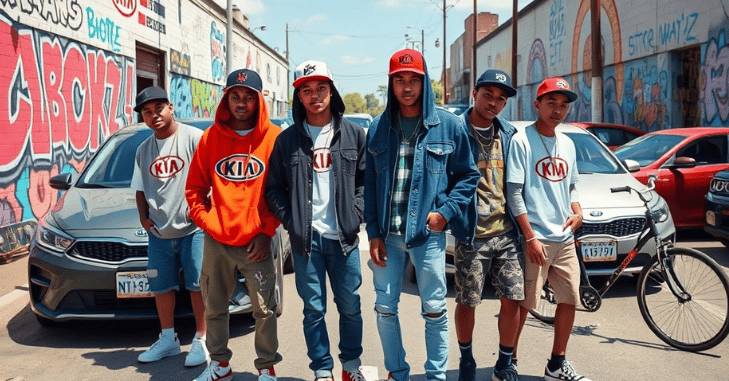
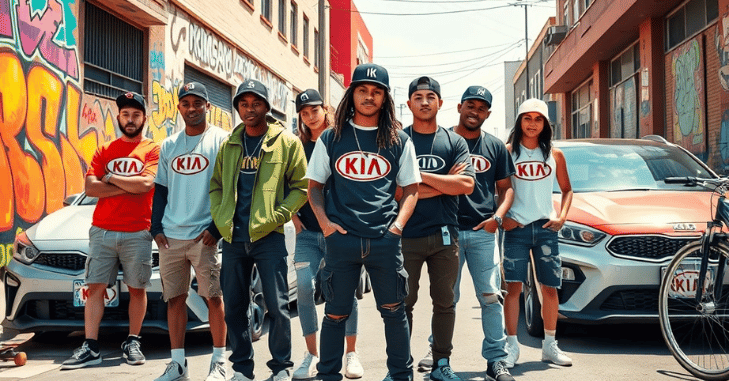
The Kia Boyz are not a formally organized gang or criminal network but rather a loosely connected group of individuals linked by a shared trend that spread rapidly through social media. The term originated after young people, mostly teenagers, began posting online videos demonstrating how easily certain Kia and Hyundai vehicles could be stolen due to missing anti-theft features.
What started as localized behavior quickly turned into a nationwide phenomenon as copycat thefts emerged across multiple cities. Many participants were motivated by online attention, peer recognition, and the thrill of defying authority rather than financial gain.
The lack of a clear hierarchy or centralized leadership makes the Kia Boyz difficult to define as a traditional gang; instead, they represent a modern example of how digital platforms can unintentionally encourage unlawful behavior. Over time, the label “Kia Boyz” became a broad media term used to describe anyone involved in this style of vehicle theft, even if they had no direct connection to the original group or location.
The Vehicle Vulnerability Explained
At the center of the Kia Boyz phenomenon was a critical design decision. Many Kia and Hyundai vehicles manufactured roughly between 2011 and 2021 in the U.S. were not equipped with engine immobilizers.
An engine immobilizer is a standard anti-theft system that prevents a car from starting unless the correct electronic key is present. While immobilizers were common in vehicles sold in Europe and Canada, they were not federally required in the United States during that period.
How the Theft Worked
The theft method was shockingly simple:
- Remove the steering column cover
- Expose the ignition switch
- Use a USB cable or similar object to turn the ignition
This ease of access turned the vehicles into prime targets for theft, especially among young people seeking thrills or social media attention.
Role of Social Media in the Spread
TikTok and Viral Challenges
Social media platforms, particularly TikTok, played a central role in amplifying the Kia Boyz trend. Short videos demonstrated step-by-step theft methods, often accompanied by music, humor, and celebratory captions.
The algorithm-driven nature of these platforms meant that once a video gained traction, it was quickly shown to thousands or millions of users, many of whom attempted to replicate the acts.
Influence and Peer Validation
For many participants, the motivation extended beyond theft itself. Online validation through likes, shares, and comments created a feedback loop that encouraged risk-taking and illegal behavior.
Cities Most Affected
The Kia Boyz trend caused spikes in car thefts across multiple U.S. cities, including:
- Milwaukee (where the term is believed to have originated)
- Chicago
- St. Louis
- Columbus
- Minneapolis
- Denver
- Seattle
Some cities reported car theft increases of over 100%, overwhelming police departments and insurance companies.
Impact on Public Safety
Dangerous Driving and Crashes
Many stolen vehicles were driven recklessly, often by individuals without licenses. This led to:
- High-speed police chases
- Serious traffic accidents
- Injuries and fatalities involving drivers, passengers, and pedestrians
Community Fear
Residents in affected areas reported heightened anxiety, property damage, and disruptions to daily life. The ease of theft meant that even parked cars in residential neighborhoods were vulnerable.
Legal Consequences for Participants
| Category | Details |
| Juvenile Arrests | Many individuals involved were minors. Juvenile courts struggled to balance accountability with rehabilitation, especially due to rising repeat offenses. |
| Common Criminal Charges | Auto theft, reckless endangerment, property damage, and fleeing law enforcement. |
| Legal Penalties | Penalties varied by state and could include detention, probation, fines, and mandatory counseling programs. |
Financial and Insurance Fallout
Rising Insurance Costs
Insurance companies responded by:
- Raising premiums for Kia and Hyundai owners
- Refusing coverage for certain models
- Declaring some vehicles high-risk
This placed financial strain on law-abiding owners who had no role in the design flaw.
Lawsuits Against Automakers
- Kia and Hyundai faced multiple class-action lawsuits across the United States.
- Automakers were accused of negligence for not including standard anti-theft technology, such as engine immobilizers.
- Lawsuits claimed the design flaw made vehicles easy targets for theft.
- Legal settlements included financial compensation for affected vehicle owners.
- Companies offered free security upgrades to improve vehicle protection.
- Extended warranties were provided as part of settlement agreements.
Automaker Response
Software Updates and Fixes
Kia and Hyundai responded to the growing theft crisis by introducing a range of software updates and security fixes aimed at reducing vehicle vulnerability. The automakers rolled out free software updates designed to enhance theft deterrence by modifying how the ignition system responds when unauthorized access is detected.
In addition, they distributed steering wheel locks to affected vehicle owners as an immediate physical security measure. Both companies also launched anti-theft upgrade programs, allowing eligible vehicles to receive enhanced security features at no cost, helping to restore consumer confidence and reduce insurance risks.
Public Awareness Campaigns
Alongside technical solutions, Kia and Hyundai implemented public awareness campaigns in collaboration with local law enforcement agencies. These initiatives focused on educating vehicle owners about theft prevention strategies, such as proper vehicle locking, parking in well-lit areas, and using visible deterrents.
The companies also provided online resources, dealership support, and direct owner notifications to ensure customers were informed about available security upgrades and safety practices. Together, these efforts aimed not only to curb theft rates but also to rebuild trust and demonstrate corporate responsibility in addressing the issue.

Government and Law Enforcement Actions
Legislative Discussions
The Kia Boyz phenomenon reignited debate around:
- Federal vehicle safety standards
- Juvenile justice reform
- Corporate responsibility in product security
Cultural and Media Impact
The term “Kia Boyz” entered mainstream media, appearing in news headlines, documentaries, and academic discussions. It became a case study in how digital culture can rapidly influence real-world behavior.
Ethical and Social Considerations
Experts emphasized that many participants came from disadvantaged backgrounds, highlighting broader issues such as:
- Lack of youth programs
- Economic inequality
- Digital accountability
Criminologists argue that long-term solutions must address social conditions, not just enforcement.
Lessons Learned
The Kia Boyz phenomenon exposed weaknesses at multiple levels:
- Manufacturing decisions prioritizing cost over security
- Social media amplification of harmful trends
- Gaps in youth engagement and education
Conclusion
The Kia Boyz phenomenon serves as a powerful reminder of the unintended consequences that can arise at the intersection of technology, social media, and social inequality. While Kia and Hyundai have taken meaningful steps to address vehicle vulnerabilities through software updates, security upgrades, and public awareness efforts, the broader issues extend far beyond automotive design.
The trend revealed gaps in federal safety standards, challenges within juvenile justice systems, and the profound influence of digital platforms on youth behavior. Ultimately, preventing similar incidents in the future will require a multifaceted approach, one that includes stronger product security, responsible social media governance, community investment in youth programs, and policies that balance accountability with rehabilitation.
Want to know about OTR Jobs: Tips for Staying Healthy and Safe on Long Hauls Check out our EVs and Automobile category.
FAQs
In Korean, “ki” signifies “to arise,” and “a” might represent Asia. Thus, “Kia” essentially translates to “from Asia.”
Yes, they still exist. However, since they can’t steal a newer Kia, you will still be able to drive your car. Regretfully, it simply means that those who are too naive to understand that they can’t steal the newer Kias like they did the previous ones will end up damaging your car.
Due to their lack of driving skills, the Kia Boyz frequently totaled the automobiles or caused damage costing thousands of dollars. A few of the robbers were as young as ten.
Among the top ten most stolen vehicles in 2024 were models like the Hyundai Elantra and Sonata, as well as Kia Optima, Soul, and Sportage. In Colorado, local police officers advise owners of Kia and Hyundai vehicles to patch their vehicles right away.