When planning a new software development project, it’s easy to let your imagination run wild. Maybe you want to build the next app to rival Uber or a SaaS powerhouse to compete with Zendesk. It’s tempting to think big—feature-rich dashboards, advanced integrations, and flashy UX right from day one.
But here’s the reality: developing a complex, fully-loaded product straight out of the gate is rarely the best move, especially for startups and solo developers.
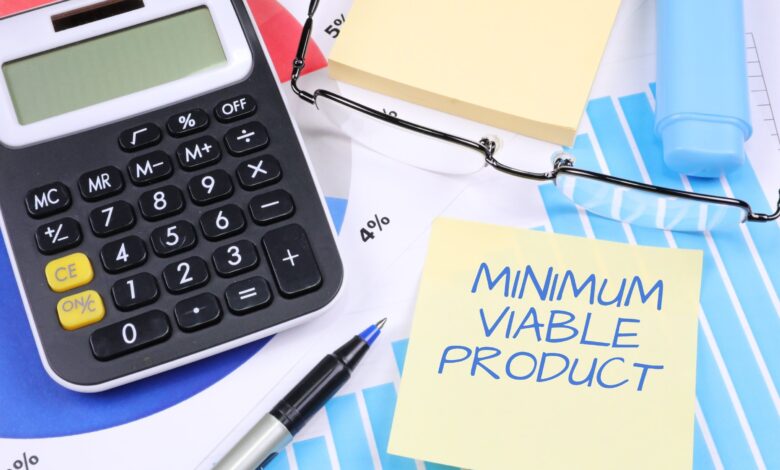
Instead, a smarter approach is to start with a Minimum Viable Product (MVP)—a stripped-down, focused version of your product that allows you to test your idea, reduce risk, and bring it to market faster.
In this article, we’ll break down what an MVP is, why it should be your go-to strategy, and how to get started on building one. Whether you’re launching your first app or working on your tenth, this lean approach to development can save you time, money, and frustration.
What Is a Minimum Viable Product?
A Minimum Viable Product (MVP) is a simple, early version of your software product that includes just the core functionality needed to solve the user’s main problem. No luxury features. No fluff. Just the essentials.
The goal of an MVP is twofold:
- Deliver value quickly with a usable, focused product.
- Test the market and validate your assumptions before investing heavily in full development.
Think of an MVP as your product’s first working prototype, ready for the real world—but with the understanding that it will evolve based on user feedback.
Rather than trying to build a complete solution from day one, you build something small, then refine and expand it over time.
MVP vs. Feature-Rich Software
Let’s take a moment to compare MVPs with their often misguided counterpart: the feature-rich product.
Feature-rich applications are packed with tools, options, and integrations—sometimes to a fault. They try to do everything for everyone. But in doing so, they often:
- Overwhelm users with complexity
- Slow down development cycles
- Increase costs
- Make onboarding and support more difficult
And worst of all, many of these features go unused.
On the flip side, MVPs offer:
- Simplicity: They’re easy to use and maintain.
- Speed: They can be brought to market quickly.
- Focus: Every feature serves a clear, essential purpose.
Sure, a feature-rich product may sound like a dream. But when that dream takes 18 months to build and falls flat with users who didn’t even need half of what you made, it becomes a costly lesson.
Why You Should Build an MVP
If you’re on the fence about whether to build an MVP or aim for a fully-developed product, here are some compelling reasons to go the MVP route:
1. Faster Time to Market
By only focusing on core features, you can launch your product significantly faster. In a competitive space, getting your product into users’ hands early is crucial. It allows you to test your concept before someone else does.
2. Lower Development Costs
Building a full-featured product can drain your budget quickly. An MVP allows you to allocate resources efficiently—building only what’s necessary to prove your concept.
3. Real User Feedback
There’s no substitute for feedback from real users. By releasing your MVP early, you gain insights into what people actually want—not just what you think they want.
4. Proof of Concept for Investors or Stakeholders
If you’re seeking funding or buy-in, a functioning MVP can be a powerful demonstration of your idea. It shows potential partners that you’re capable of delivering and iterating based on feedback.
5. Iterative Improvement
Launching with an MVP sets you up for agile, iterative development. You can adapt quickly, fix what doesn’t work, and double down on features users love.
Real-World Examples of MVP Success
Many of today’s tech giants started with MVPs. Their early versions were simple but powerful enough to prove the concept—and that’s all they needed.
Groupon
Groupon launched with a basic WordPress site and emailed daily PDFs to subscribers. That minimal approach allowed them to validate the idea of group discounts before building their custom backend systems.
Amazon
Jeff Bezos started Amazon as a bookstore. That was the core idea. Books were simple to ship, easy to manage, and in high demand. Once validated, Amazon expanded into music, electronics, and ultimately—everything.
Originally a Harvard-only directory of student photos and names, Facebook’s MVP focused on a single function: connecting students. It didn’t become a full social media platform until it proved its value.
Each of these companies began small and grew based on user demand—not assumptions.
MVPs in Smaller Software Projects
You don’t need to be the next Amazon to benefit from building an MVP. This approach works just as well for niche software tools, indie developers, or small businesses with limited resources.
Take MLtek Software, for example. Their flagship product, ArchiverFS, began as a streamlined solution for archiving old and unused files. Built as an MVP to solve a very specific need, it later evolved into a sophisticated tool used by businesses to manage unstructured data across their network environments. It didn’t start as a full platform—it became one over time based on demand.
That’s the power of building lean and letting the market guide your roadmap.
Where to Start With Your MVP
Ready to build your MVP? Here’s a step-by-step guide to get you moving in the right direction:
1. Define the Problem
Start with a clear, user-focused problem you’re solving. Avoid vague goals like “make life easier.” Be specific: “Enable small businesses to automate invoice reminders.”
2. Identify Core Features
List all the features your dream product would have—then cut that list down to the bare minimum. Only include what’s necessary to make your solution functional and valuable.
3. Understand Your Audience
Know who your MVP is for. Interview potential users, research forums, and study competitors to ensure you’re targeting the right pain points.
4. Build a Prototype or Early Version
This could be anything from a clickable design mockup to a working web app. Keep it simple, but ensure it’s usable enough to gather real feedback.
5. Launch and Learn
Release your MVP to a limited audience. Collect feedback, analyze behavior, and be ready to pivot or iterate. The more you learn early, the better your final product will be.
Final Thoughts
Building a Minimum Viable Product isn’t about doing less—it’s about doing what matters first. In a world where developers are constantly pressured to “build big,” the MVP approach stands out as a smarter, more sustainable path to success.
Whether you’re developing a SaaS tool, a mobile app, or a system utility like ArchiverFS, starting with an MVP allows you to validate your ideas, engage users early, and evolve with real-world insights—not just assumptions.
Before you spend months building out features that no one might want, ask yourself: What’s the smallest version of this product I can create to test my idea?
Then build that—and nothing more.
Apart from that if you want to know about Cloud Computing then please visit our Software Category.